


Page 168 - Biobehavioral Resilence to Stress
P. 168
Resilience and Survival in Extreme Environments                 145


                                               The ancestral physiological phenotype

                                                    Oxygen-sensing mechanisms


                                    Carotid   Pulmonary     General     Kidney,   Many tissues
                                    body      vasculature  vasculature   liver     and organs


                                                                                    Altered
                                    Hypoxic   Redistributed  VEGF1     EPO and    expression of
                                    ventilory  pulmonary     and                   metabolic
                                    response   circulation  angiogenesis  erythropiesis  enzymes and
                                                                                  transporters


                                                Blunted
                                                                                     Fuel
                                    Blunted     hypoxic    Expanded    Expanded    preference
                                                             blood
                                     HVR       pulmonary               RBC mass
                                             vasoconstriction  volume             adjustments


                                                    “Downstream” consequences


                                               Increased   Dampened
                                   Increased   reliance on  heart rate for  CHO as
                                   reliance on  slow twitch  a given    preferred
                                    aerobic   fibers−tighter  submaximal  fuel for heart  Blunted
                                   metabolism  coupling of  work rate  and muscle  catecholamine
                                   (low lactate  energy    (due in part  metabolism  response to
                                  accumulation  demand and  to increased  (increased  exercise
                                     during      supply    O -carrying  ATP/O )
                                    exercise)               2                2
                                               pathways     capacity)

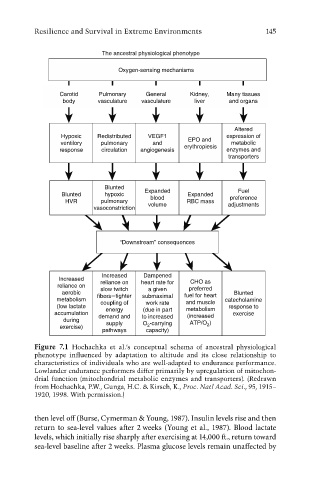
                             Figure 7.1  Hochachka et al.’s conceptual schema of ancestral physiological

                             phenotype influenced by adaptation to altitude and its close relationship to
                             characteristics of individuals who are well-adapted to endurance performance.
                             Lowlander endurance performers differ primarily by upregulation of mitochon-
                             drial function (mitochondrial metabolic enzymes and transporters). (Redrawn
                             from Hochachka, P.W., Gunga, H.C. & Kirsch, K., Proc. Natl Acad. Sci., 95, 1915–
                             1920, 1998. With permission.)


                             then level off (Burse, Cymerman & Young, 1987). Insulin levels rise and then

                             return to sea-level values after 2 weeks (Young et al., 1987). Blood lactate


                              levels, which initially rise sharply after exercising at 14,000 ft ., return toward

                             sea-level baseline after 2 weeks. Plasma glucose levels remain unaff ected by


                                                                                             12/15/2007   3:33:06 PM
                    CRC_71777_Ch007.indd   145
                    CRC_71777_Ch007.indd   145                                               12/15/2007   3:33:06 PM

