


Page 287 - Biodegradable Polyesters
P. 287
10.3  Crystallization-Induced Toughness and Morphological Control  265


                                   2 μm                    2 μm                     2  μm
               (a)      X c  = 2.7%    (b)      X c  = 22.6%    (c)     X c  = 55.8%
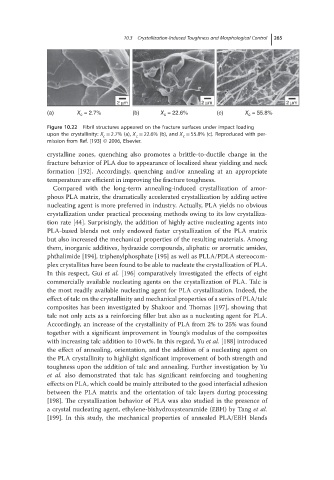
               Figure 10.22 Fibril structures appeared on the fracture surfaces under impact loading
               upon the crystallinity: X = 2.7% (a), X = 22.6% (b), and X = 55.8% (c). Reproduced with per-
                               c        c             c
               mission from Ref. [193] © 2006, Elsevier.
               crystalline zones, quenching also promotes a brittle-to-ductile change in the
               fracture behavior of PLA due to appearance of localized shear yielding and neck
               formation [192]. Accordingly, quenching and/or annealing at an appropriate
               temperature are efficient in improving the fracture toughness.
                Compared with the long-term annealing-induced crystallization of amor-
               phous PLA matrix, the dramatically accelerated crystallization by adding active
               nucleating agent is more preferred in industry. Actually, PLA yields no obvious
               crystallization under practical processing methods owing to its low crystalliza-
               tion rate [44]. Surprisingly, the addition of highly active nucleating agents into
               PLA-based blends not only endowed faster crystallization of the PLA matrix
               but also increased the mechanical properties of the resulting materials. Among
               them, inorganic additives, hydrazide compounds, aliphatic or aromatic amides,
               phthalimide [194], triphenylphosphate [195] as well as PLLA/PDLA stereocom-
               plex crystallites have been found to be able to nucleate the crystallization of PLA.
               In this respect, Gui et al. [196] comparatively investigated the effects of eight
               commercially available nucleating agents on the crystallization of PLA. Talc is
               the most readily available nucleating agent for PLA crystallization. Indeed, the
               effect of talc on the crystallinity and mechanical properties of a series of PLA/talc
               composites has been investigated by Shakoor and Thomas [197], showing that
               talc not only acts as a reinforcing filler but also as a nucleating agent for PLA.
               Accordingly, an increase of the crystallinity of PLA from 2% to 25% was found
               together with a significant improvement in Young’s modulus of the composites
               with increasing talc addition to 10 wt%. In this regard, Yu et al. [188] introduced
               the effect of annealing, orientation, and the addition of a nucleating agent on
               the PLA crystallinity to highlight significant improvement of both strength and
               toughness upon the addition of talc and annealing. Further investigation by Yu
               et al. also demonstrated that talc has significant reinforcing and toughening
               effects on PLA, which could be mainly attributed to the good interfacial adhesion
               between the PLA matrix and the orientation of talc layers during processing
               [198]. The crystallization behavior of PLA was also studied in the presence of
               a crystal nucleating agent, ethylene-bishydroxystearamide (EBH) by Tang et al.
               [199]. In this study, the mechanical properties of annealed PLA/EBH blends

