


Page 282 - Carbonate Platforms Facies, Sequences, and Evolution
P. 282
Modified from Garcia-Mondejar (1979).
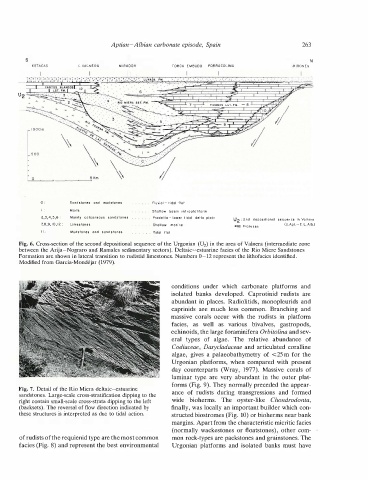
Fig. 7. Detail of the Rio Miera deltaic-estuarine
. II: Mudstones and sand stones 7,8,9,10,12: Limestones 2,3,4,5,6: Mainly calcareous sandstones I: Marls Sandstones and mudstones 0: �0��--�---�--��S Km 500 IOOOm ESTACAS C.. VALNERA MIRADOR s
these structures is interpreted as due to tidal action.
.
Tidal flat .:tta: Hi::;tuses Shallow marine (U.Apt.- E.l.Aib.) U2: 2nd depositional sequence in Valnero Prodelta- lower tidal delta plain Shallow basin introplottorm Fluvial- lido! trot ;/ I f>ICONES LST. FM. - TORCA EMBUDO PORRACOLINA MIRONES N 263
(backsets). The reversal of flow direction indicated by
right contain small-scale cross-strata dipping to the left
sandstones. Large-scale cross-stratification dipping to the
facies (Fig. 8) and represent the best environmental
of rudists of the requienid type are the most common
eral
wide
ance
algae,
facies,
isolated
of
caprinids
as
conditions
types
gives
of
banks
well
rudists
bioherms.
day counterparts
under
Aptian-Albian carbonate episode, Spain
as
abundant in places.
Urgonian platforms
Urgonian platforms,
algae.
laminar type are very
The
during
which
(Wray,
massive corals occur with
The
developed.
various
8
1977).
a palaeobathymetry
and isolated
oyster-like
are much less common.
carbonate
relative
of
bivalves,
transgressions
Caprotinid
(normally wackestones or ftoatstones),
banks
the rudists in
and
Formation are shown in lateral transition to rudistid limestones. Numbers 0-12 represent the lithofacies identified.
platforms
Branching
rudists
abundance
between the Arija-Nograro and Ramales sedimentary sectors). Deltaic-estuarine facies of the Rio Miere Sandstones
finally, was locally an important builder which con
forms (Fig. 9). They normally preceded the appear
abundant in the outer plat
other com
Fig. 6. Cross-section of the second depositional sequence of the Urgonian (U2) in the area of Valnera (intermediate zone
echinoids, the large foraminifera Orbitolina and sev
are
Chondrodonta,
formed
and
must have
Radiolitids, monopleurids and
platform
and
gastropods,
<25 m for the
when compared with present
mon rock-types are packstones and grainstones. The
Codiaceae, Dasycladaceae and articulated coralline
structed biostromes (Fig. 10) or bioherms near bank
margins. Apart from the characteristic micritic facies
of
Massive corals of

