


Page 420 - Fundamentals of Enhanced Oil and Gas Recovery
P. 420
408                                                                            Afshin Tatar


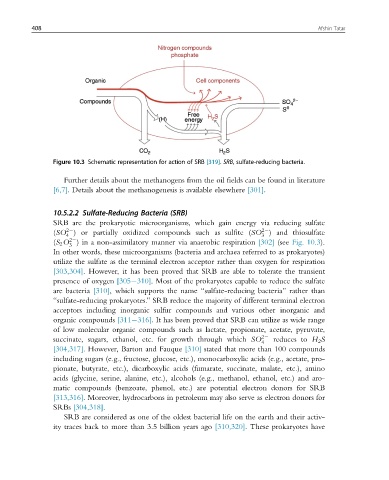
                Figure 10.3 Schematic representation for action of SRB [319]. SRB, sulfate-reducing bacteria.

                   Further details about the methanogens from the oil fields can be found in literature
                [6,7]. Details about the methanogenesis is available elsewhere [301].


                10.5.2.2 Sulfate-Reducing Bacteria (SRB)
                SRB are the prokaryotic microorganisms, which gain energy via reducing sulfate
                                                                          22
                   22
                (SO ) or partially oxidized compounds such as sulfite (SO ) and thiosulfate
                   4                                                     3
                    22
                (S 2 O ) in a non-assimilatory manner via anaerobic respiration [302] (see Fig. 10.3).
                    3
                In other words, these microorganisms (bacteria and archaea referred to as prokaryotes)
                utilize the sulfate as the terminal electron acceptor rather than oxygen for respiration
                [303,304]. However, it has been proved that SRB are able to tolerate the transient
                presence of oxygen [305 310]. Most of the prokaryotes capable to reduce the sulfate
                are bacteria [310], which supports the name “sulfate-reducing bacteria” rather than
                “sulfate-reducing prokaryotes.” SRB reduce the majority of different terminal electron
                acceptors including inorganic sulfur compounds and various other inorganic and
                organic compounds [311 316]. It has been proved that SRB can utilize as wide range
                of low molecular organic compounds such as lactate, propionate, acetate, pyruvate,
                succinate, sugars, ethanol, etc. for growth through which SO 22  reduces to H 2 S
                                                                         4
                [304,317]. However, Barton and Fauque [310] stated that more than 100 compounds
                including sugars (e.g., fructose, glucose, etc.), monocarboxylic acids (e.g., acetate, pro-
                pionate, butyrate, etc.), dicarboxylic acids (fumarate, succinate, malate, etc.), amino
                acids (glycine, serine, alanine, etc.), alcohols (e.g., methanol, ethanol, etc.) and aro-
                matic compounds (benzoate, phenol, etc.) are potential electron donors for SRB
                [313,316]. Moreover, hydrocarbons in petroleum may also serve as electron donors for
                SRBs [304,318].
                   SRB are considered as one of the oldest bacterial life on the earth and their activ-
                ity traces back to more than 3.5 billion years ago [310,320]. These prokaryotes have

