


Page 124 - Materials Chemistry, Second Edition
P. 124
SOURCING LIFE CYCLE INVENTORY DATA       107

                                                                            User feedback
                                                         Networking of
                  Data in the supply chain                databases
                                                             JL

                                                          Storing of
                    Raw data           Database            datasets         User interaction
                    collection        management                          *
                                                          (database)
                                           *               31
                    Raw data          Unit process        Database
                   collection -         database          review and   4—
                    extended          development         validation
                                                             t
                    Raw data                              Aggregated
                   collection -                         process dataset
                  crowd sourcing                         development
                                    System n nodellin  3
                                       information:
                                   Algorithms for linking
                                   database and handling
                                   multi-output datasets

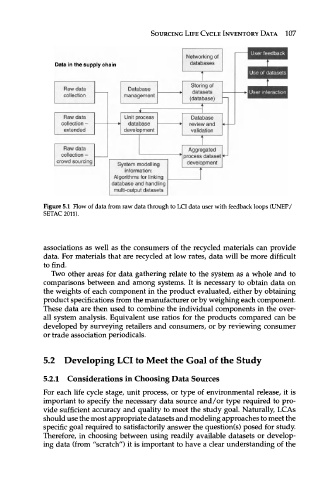
              Figure 5.1 Row of data from raw data through to LCI data user with feedback loops (UNEP/
              SETAC 2011).


              associations as well as the consumers of the recycled materials can provide
              data. For materials that are recycled at low rates, data will be more difficult
              to find.
                Two other areas for data gathering relate to the system as a whole and to
              comparisons between and among systems. It is necessary to obtain data on
              the weights of each component in the product evaluated, either by obtaining
              product specifications from the manufacturer or by weighing each component.
              These data are then used to combine the individual components in the over-
              all system analysis. Equivalent use ratios for the products compared can be
              developed by surveying retailers and consumers, or by reviewing consumer
              or trade association periodicals.


              5.2 Developing LCI to Meet the Goal of the Study


              5.2,1 Considerations in Choosing Data Sources

              For each life cycle stage, unit process, or type of environmental release, it is
              important to specify the necessary data source and/or type required to pro-
              vide sufficient accuracy and quality to meet the study goal. Naturally, LCAs
              should use the most appropriate datasets and modeling approaches to meet the
              specific goal required to satisfactorily answer the question(s) posed for study.
              Therefore, in choosing between using readily available datasets or develop-
              ing data (from "scratch") it is important to have a clear understanding of the

