


Page 147 - Mechatronics for Safety Security and Dependability in a New Era
P. 147
Ch27-I044963.fm  Page 130  Monday, August 7, 2006  11:26 AM
            Ch27-I044963.fm
               130
               130    Page 130  Monday, August 7,2006  11:26 AM
               This paper describes a method  of reducing the number  of the tests, in which  k-nearest-neighbor  rule is
               used  instead  of  the  heuristics.  In  this  method  the  k-nearest-neighbor  rule  extracts  some parts  and/or
               subassemblies  whose possibilities  of being removed without  any  interference  are  strong,  and then the
               tests for  only them  are performed  by using CAD data.


                              3        r1
                    1                       r6
                                                      : Part t
                                    1    2     5    5:Par
                    2          4     r2  r3  r5  r7  r8  —: : Connective relation
                                                       Connective relation
                                    6    3     4
                                                       between parts
                    6          5      r4               between parts
                                   Part-connectivity  graph
                                   Part-connectivity graph
                                                                                 rule
                                                                   K-nearest-neighbor
                                                                3  K-nearest-neighbor rule
                                                                _L
                                                                      Labeled samples
                                   T r1                               Labeled samples
                                       ri(i=1,2,…): Connective relation
                                   }_
                        r6 r6      r2  ri(i=1,2,…):  Connective relation
                  r8 r8       r5 r5  ,            : Heuristic precedence relation
                                               : Heuristic precedence relation
                        r7 r7      r3        Generation of heuristic
                                             Generation of heuristic
                                   r r4 4
                  4 4   3 3   2 2  1 1 Level  precedence graph
                                     Level
                                             precedence graph
                                   3 J
                   cut set  t  1 1  1  1 £ 7©- -©                    >
                                2
                                      5
                   cut s e
                   {r1, r2}   1  1  2  4   Weight assignment  and cut-set
                   {r1, r2>..V^Tv
                                           Weight assignment and cut-set
                          6     3  3  4    generation
                             1 |V®-^-©     generation
                               {r2, r4}
                               {r2, r4}
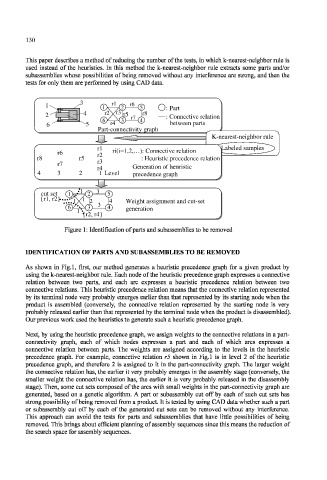
                          Figure  1: Identification  of parts and subassemblies to be removed
               IDENTIFICATION  OF PARTS AND SUBASSEMBLIES   TO BE REMOVED
               As  shown  in Fig.l,  first,  our  method  generates  a heuristic  precedence  graph  for  a  given  product  by
               using the k-nearest-neighbor  rule. Each  node of the heuristic precedence graph expresses a connective
               relation  between  two  parts,  and  each  arc  expresses  a  heuristic  precedence  relation  between  two
               connective relations. This heuristic  precedence relation means that the connective relation  represented
               by  its terminal  node  very  probably  emerges earlier than that represented  by  its starting node when the
               product  is  assembled  (conversely,  the  connective  relation  represented  by  the  starting  node  is  very
               probably released earlier than that represented  by the terminal node when the product  is disassembled).
               Our previous work used the heuristics to generate such a heuristic precedence graph.
               Next, by using the heuristic precedence  graph, we assign weights to the connective relations  in a part-
               connectivity  graph,  each  of  which  nodes  expresses  a  part  and  each  of  which  arcs  expresses  a
               connective  relation  between  parts.  The  weights  are  assigned  according  to  the  levels  in  the  heuristic
               precedence  graph.  For  example,  connective  relation  r5  shown  in  Fig. 1 is  in  level  2  of  the  heuristic
               precedence  graph,  and  therefore  2  is  assigned  to  it  in the  part-connectivity  graph.  The  larger  weight
               the connective relation has, the earlier it very probably  emerges  in the assembly  stage (conversely, the
               smaller weight  the connective  relation  has, the  earlier  it  is very probably  released  in the  disassembly
               stage). Then,  some cut sets composed  of the arcs with  small  weights  in the part-connectivity  graph  are
               generated,  based  on  a genetic  algorithm.  A part  or  subassembly  cut  off  by  each  of  such  cut  sets has
               strong possibility  of being removed  from  a product. It is tested  by using CAD data whether  such a part
               or  subassembly  cut  off  by  each  of the  generated  cut  sets  can  be  removed  without  any  interference.
               This  approach  can  avoid  the  tests  for  parts  and  subassemblies  that  have  little  possibilities  of  being
               removed. This brings about efficient  planning of assembly  sequences since this means the reduction of
               the search space for assembly sequences.

