


Page 395 -
P. 395
378   Chapter 14   Security engineering


                                          Platform-Level Protection


                                             System                System              File Integrity
                                           Authentication        Authorization         Management


                                          Application-Level Protection

                                            Database       Database      Transaction    Database
                                              Login       Authorization  Management     Recovery


                                          Record-Level Protection

                                           Record Access          Record             Record Integrity
                                           Authorization         Encryption          Management


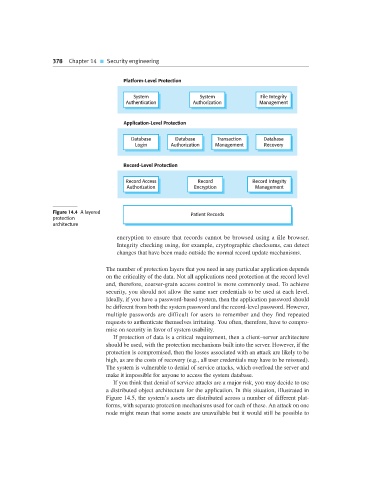
                  Figure 14.4 A layered                         Patient Records
                  protection
                  architecture
                                        encryption to ensure that records cannot be browsed using a file browser.
                                        Integrity checking using, for example, cryptographic checksums, can detect
                                        changes that have been made outside the normal record update mechanisms.

                                    The number of protection layers that you need in any particular application depends
                                    on the criticality of the data. Not all applications need protection at the record level
                                    and, therefore, coarser-grain access control is more commonly used. To achieve
                                    security, you should not allow the same user credentials to be used at each level.
                                    Ideally, if you have a password-based system, then the application password should
                                    be different from both the system password and the record-level password. However,
                                    multiple passwords are difficult for users to remember and they find repeated
                                    requests to authenticate themselves irritating. You often, therefore, have to compro-
                                    mise on security in favor of system usability.
                                      If protection of data is a critical requirement, then a client–server architecture
                                    should be used, with the protection mechanisms built into the server. However, if the
                                    protection is compromised, then the losses associated with an attack are likely to be
                                    high, as are the costs of recovery (e.g., all user credentials may have to be reissued).
                                    The system is vulnerable to denial of service attacks, which overload the server and
                                    make it impossible for anyone to access the system database.
                                      If you think that denial of service attacks are a major risk, you may decide to use
                                    a distributed object architecture for the application. In this situation, illustrated in
                                    Figure 14.5, the system’s assets are distributed across a number of different plat-
                                    forms, with separate protection mechanisms used for each of these. An attack on one
                                    node might mean that some assets are unavailable but it would still be possible to

