


Page 316 -
P. 316
CHAPTER 11  ANALYSIS CONCEPTS AND PRINCIPLES                       287

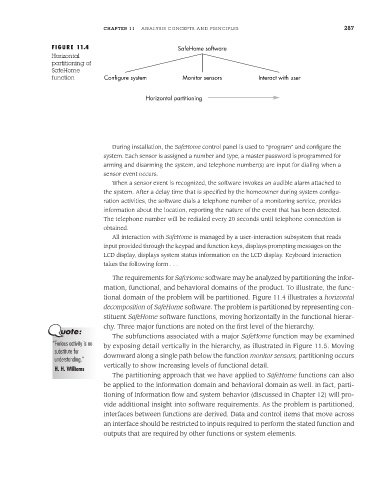
               FIGURE 11.4                        SafeHome software
               Horizontal
               partitioning of
               SafeHome
               function       Configure system      Monitor sensors      Interact with user

                                          Horizontal partitioning


                                During installation, the SafeHome control panel is used to "program" and configure the
                              system. Each sensor is assigned a number and type, a master password is programmed for
                              arming and disarming the system, and telephone number(s) are input for dialing when a
                              sensor event occurs.
                                When a sensor event is recognized, the software invokes an audible alarm attached to
                              the system. After a delay time that is specified by the homeowner during system configu-
                              ration activities, the software dials a telephone number of a monitoring service, provides
                              information about the location, reporting the nature of the event that has been detected.
                              The telephone number will be redialed every 20 seconds until telephone connection is
                              obtained.
                                All interaction with SafeHome is managed by a user-interaction subsystem that reads
                              input provided through the keypad and function keys, displays prompting messages on the
                              LCD display, displays system status information on the LCD display. Keyboard interaction
                              takes the following form . . .

                                The requirements for SafeHome software may be analyzed by partitioning the infor-
                              mation, functional, and behavioral domains of the product. To illustrate, the func-
                              tional domain of the problem will be partitioned. Figure 11.4 illustrates a horizontal
                              decomposition of SafeHome software. The problem is partitioned by representing con-
                              stituent SafeHome software functions, moving horizontally in the functional hierar-
                              chy. Three major functions are noted on the first level of the hierarchy.
                                The subfunctions associated with a major SafeHome function may be examined
                “Furious activity is no  by exposing detail vertically in the hierarchy, as illustrated in Figure 11.5. Moving
                substitute for
                understanding.”  downward along a single path below the function monitor sensors, partitioning occurs
                              vertically to show increasing levels of functional detail.
                H. H. Williams
                                The partitioning approach that we have applied to SafeHome functions can also
                              be applied to the information domain and behavioral domain as well. In fact, parti-
                              tioning of information flow and system behavior (discussed in Chapter 12) will pro-
                              vide additional insight into software requirements. As the problem is partitioned,
                              interfaces between functions are derived. Data and control items that move across
                              an interface should be restricted to inputs required to perform the stated function and
                              outputs that are required by other functions or system elements.

