


Page 137 - Standards for K-12 Engineering Education
P. 137
Standards for K-12 Engineering Education?

               122                                            STANDARDS FOR K–12 ENGINEERING EDUCATION?


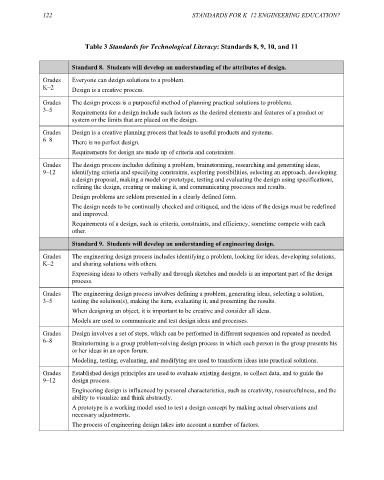
                             Table 3 Standards for Technological Literacy: Standards 8, 9, 10, and 11


                         Standard 8.  Students will develop an understanding of the attributes of design.
               Grades    Everyone can design solutions to a problem.
               K–2       Design is a creative process.

               Grades    The design process is a purposeful method of planning practical solutions to problems.
               3–5       Requirements for a design include such factors as the desired elements and features of a product or
                         system or the limits that are placed on the design.

               Grades    Design is a creative planning process that leads to useful products and systems.
               6–8       There is no perfect design.

                         Requirements for design are made up of criteria and constraints.
               Grades    The design process includes defining a problem, brainstorming, researching and generating ideas,
               9–12      identifying criteria and specifying constraints, exploring possibilities, selecting an approach, developing
                         a design proposal, making a model or prototype, testing and evaluating the design using specifications,
                         refining the design, creating or making it, and communicating processes and results.
                         Design problems are seldom presented in a clearly defined form.
                         The design needs to be continually checked and critiqued, and the ideas of the design must be redefined
                         and improved.
                         Requirements of a design, such as criteria, constraints, and efficiency, sometime compete with each
                         other.

                         Standard 9.  Students will develop an understanding of engineering design.
               Grades    The engineering design process includes identifying a problem, looking for ideas, developing solutions,
               K–2       and sharing solutions with others.
                         Expressing ideas to others verbally and through sketches and models is an important part of the design
                         process.
               Grades    The engineering design process involves defining a problem, generating ideas, selecting a solution,
               3–5       testing the solution(s), making the item, evaluating it, and presenting the results.
                         When designing an object, it is important to be creative and consider all ideas.
                         Models are used to communicate and test design ideas and processes.
               Grades    Design involves a set of steps, which can be performed in different sequences and repeated as needed.
               6–8       Brainstorming is a group problem-solving design process in which each person in the group presents his
                         or her ideas in an open forum.
                         Modeling, testing, evaluating, and modifying are used to transform ideas into practical solutions.

               Grades    Established design principles are used to evaluate existing designs, to collect data, and to guide the
               9–12      design process.
                         Engineering design is influenced by personal characteristics, such as creativity, resourcefulness, and the
                         ability to visualize and think abstractly.
                         A prototype is a working model used to test a design concept by making actual observations and
                         necessary adjustments.
                         The process of engineering design takes into account a number of factors.


                                        Copyright © National Academy of Sciences. All rights reserved.

