


Page 276 - Tunable Lasers Handbook
P. 276
236      Norman P.  Barnes

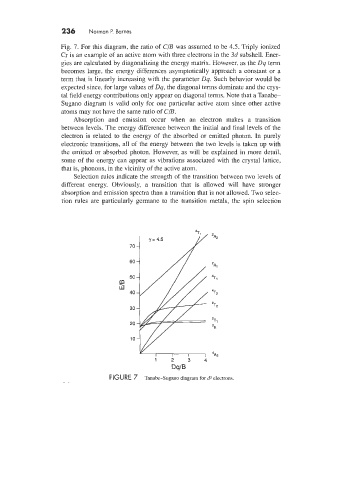
                   Fig. 7. For this diagram, the ratio of C/B was assumed to be 4.5. Triply ionized
                   Cr is an example of  an active atom with three electrons in the 3d subshell. Ener-
                   gies are calculated by diagonalizing the energy matrix. However, as the Dq term
                   becomes large, the energy differences asymptotically approach a constant or a
                   term that is linearly increasing with the parameter Dq. Such behavior would be
                   expected since, for large values of Dq, the diagonal terms dominate and the crys-
                   tal field energy contributions only appear on diagonal terms. Note that a Tanabe-
                   Sugano diagram is valid only for one particular active atom since other active
                   atoms may not have the same ratio of C/B.
                       Absorption  and  emission  occur  when  an  electron  makes  a  transition
                   between levels. The energy difference between the initial and final levels of  the
                   electron is related  to  the energy of  the  absorbed or emitted photon.  In purely
                   electronic transitions, all of  the energy between the two levels is taken up with
                   the emitted or absorbed photon. However, as will be explained in more detail,
                   some of  the energy can appear as vibrations associated with the crystal lattice,
                   that is, phonons, in the vicinity of the active atom.
                       Selection rules indicate the strength of  the transition between two levels of
                   different  energy.  Obviously,  a  transition  that  is  allowed  will  have  stronger
                   absorption and emission spectra than a transition that is not allowed. Two selec-
                   tion rules  are particularly  germane  to  the transition  metals, the  spin  selection


                                               1    2    3    4
                                                    Dq/B

                                  FIGURE 7  Tanabe-Sugano  diagram for d3 electrons.

