


Page 516 - Air Pollution Control Engineering
P. 516
12_ch_wang.qxd  05/05/2004  5:27 pm  Page 485
                    Emerging Pollution Control Technologies                                   485


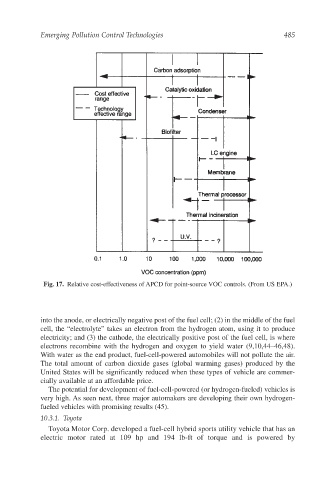
                     Fig. 17. Relative cost-effectiveness of APCD for point-source VOC controls. (From US EPA.)


                    into the anode, or electrically negative post of the fuel cell; (2) in the middle of the fuel
                    cell, the “electrolyte” takes an electron from the hydrogen atom, using it to produce
                    electricity; and (3) the cathode, the electrically positive post of the fuel cell, is where
                    electrons recombine with the hydrogen and oxygen to yield water (9,10,44–46,48).
                    With water as the end product, fuel-cell-powered automobiles will not pollute the air.
                    The total amount of carbon dioxide gases (global warming gases) produced by the
                    United States will be significantly reduced when these types of vehicle are commer-
                    cially available at an affordable price.
                       The potential for development of fuel-cell-powered (or hydrogen-fueled) vehicles is
                    very high. As seen next, three major automakers are developing their own hydrogen-
                    fueled vehicles with promising results (45).
                    10.3.1. Toyota
                       Toyota Motor Corp. developed a fuel-cell hybrid sports utility vehicle that has an
                    electric motor rated at 109 hp and 194 lb-ft of torque and is powered by

