


Page 198 -
P. 198
Chapter 4  •  Business Reporting, Visual Analytics, and Business Performance Management   197


                                                      Strategy

                                    1. Strategize                        2. Plan

                                          Mission, values, goals,  Budgets, plans, forecasts,
                                             objectives, incentives,
                                               strategy maps

                                                                targets
                                                              models, initiatives,
                                                      Integrated
                                                      Data and
                                                       Metrics
                                                            Performance dashboards,
                                                              reports, analytical tools


                                               Interpret,
                                                                      3. Monitor/Analyze
                                           collaborate, assess,
                                         decide, act, adjust, track


                                    4. Act/Adjust
                                                      Execution

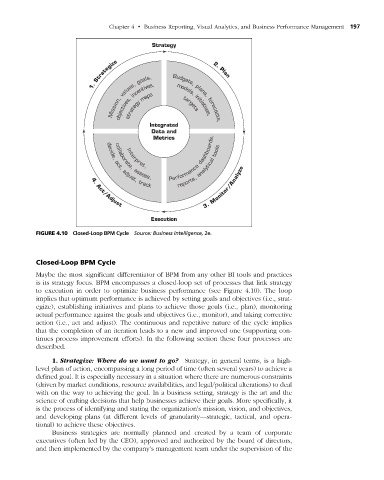
                    figuRe 4.10  Closed-Loop BPM Cycle  Source: Business Intelligence, 2e.


                    Closed-loop BpM Cycle

                    Maybe the most significant differentiator of BPM from any other BI tools and practices
                    is its strategy focus. BPM encompasses a closed-loop set of processes that link  strategy
                    to execution in order to  optimize business performance (see Figure 4.10). The loop
                    implies that optimum performance is achieved by setting goals and objectives (i.e., strat-
                    egize), establishing initiatives and plans to achieve those goals (i.e., plan), monitoring
                    actual  performance against the goals and objectives (i.e., monitor), and taking corrective
                    action (i.e., act and adjust). The continuous and repetitive nature of the cycle implies
                    that the completion of an iteration leads to a new and improved one (supporting con-
                    tinues  process improvement efforts). In the following section these four processes are
                    described.

                        1. Strategize: Where do we want to go?  Strategy, in general terms, is a high-
                    level plan of action, encompassing a long period of time (often several years) to achieve a
                    defined goal. It is especially  necessary in a  situation where there are numerous constraints
                    (driven by market conditions, resource availabilities, and legal/political alterations) to deal
                    with on the way to achieving the goal. In a business setting, strategy is the art and the
                    science of crafting decisions that help  businesses achieve their goals. More specifically, it
                    is the process of identifying and  stating the organization’s mission, vision, and objectives,
                    and developing plans (at   different   levels of granularity—strategic, tactical, and opera-
                    tional) to achieve these objectives.
                        Business strategies are normally planned and created by a team of corporate
                      executives (often led by the CEO), approved and authorized by the board of directors,
                    and then implemented by the company’s management team under the supervision of the


           M04_SHAR9209_10_PIE_C04.indd   197                                                                     1/25/14   7:34 AM

