


Page 195 -
P. 195
194  Part II  •  Descriptive Analytics


                  Application Case 4.6  (Continued)


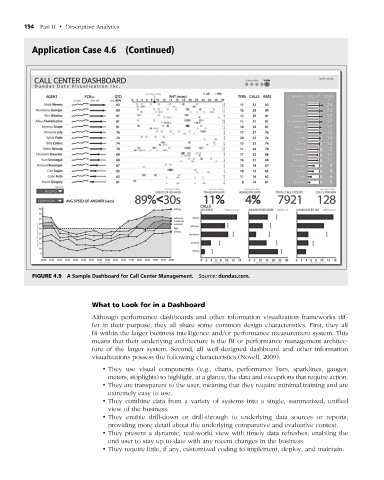
                  figuRe 4.9  A Sample Dashboard for Call Center Management.  Source: dundas.com.


                                    What to look for in a Dashboard

                                    Although performance dashboards and other information visualization frameworks dif-
                                    fer in their purpose, they all share some common design characteristics. First, they all
                                    fit within the larger business intelligence and/or performance measurement system. This
                                    means that their underlying architecture is the BI or performance management architec-
                                    ture of the larger system. Second, all well-designed dashboard and other information
                                    visualizations possess the following characteristics (Novell, 2009):
                                       • They  use  visual  components  (e.g.,  charts,  performance  bars,  sparklines,  gauges,
                                         meters, stoplights) to highlight, at a glance, the data and exceptions that require action.
                                       • They are transparent to the user, meaning that they require minimal training and are
                                         extremely easy to use.
                                       • They combine data from a variety of systems into a single, summarized, unified
                                         view of the business.
                                       • They  enable  drill-down  or  drill-through  to  underlying  data  sources  or  reports,
                                           providing more detail about the underlying comparative and evaluative context.
                                       • They present a dynamic, real-world view with timely data refreshes, enabling the
                                         end user to stay up to date with any recent changes in the business.
                                       • They require little, if any, customized coding to implement, deploy, and maintain.


           M04_SHAR9209_10_PIE_C04.indd   194                                                                     1/25/14   7:34 AM

