


Page 208 -
P. 208
Chapter 4  •  Business Reporting, Visual Analytics, and Business Performance Management   207

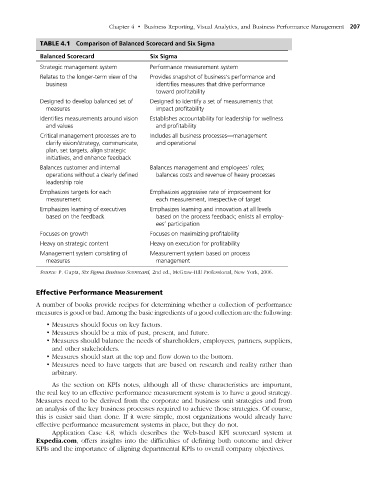
                     tABle 4.1  Comparison of Balanced Scorecard and Six Sigma

                     Balanced Scorecard               Six Sigma
                     Strategic management system      Performance measurement system
                     Relates to the longer-term view of the   Provides snapshot of business’s performance and
                       business                         identifies measures that drive performance
                                                          toward profitability
                     Designed to develop balanced set of   Designed to identify a set of measurements that
                       measures                           impact profitability
                     Identifies measurements around vision   Establishes accountability for leadership for wellness
                       and values                       and profitability
                     Critical management processes are to   Includes all business processes—management
                       clarify vision/strategy, communicate,   and operational
                       plan, set targets, align strategic
                         initiatives, and enhance feedback
                     Balances customer and internal   Balances management and employees’ roles;
                         operations without a clearly defined     balances costs and revenue of heavy processes
                       leadership role
                     Emphasizes targets for each      Emphasizes aggressive rate of improvement for
                       measurement                      each measurement, irrespective of target
                     Emphasizes learning of executives   Emphasizes learning and innovation at all levels
                       based on the feedback            based on the process feedback; enlists all employ-
                                                        ees’ participation
                     Focuses on growth                Focuses on maximizing profitability
                     Heavy on strategic content       Heavy on execution for profitability
                     Management system consisting of   Measurement system based on process
                       measures                         management
                     Source: P. Gupta, Six Sigma Business Scorecard, 2nd ed., McGraw-Hill Professional, New York, 2006.


                    effective performance Measurement
                    A number of books provide recipes for determining whether a collection of performance
                    measures is good or bad. Among the basic ingredients of a good collection are the following:
                       • Measures should focus on key factors.
                       • Measures should be a mix of past, present, and future.
                       • Measures should balance the needs of shareholders, employees, partners, suppliers,
                        and other stakeholders.
                       • Measures should start at the top and flow down to the bottom.
                       • Measures need to have targets that are based on research and reality rather than
                        arbitrary.
                        As the section on KPIs notes, although all of these characteristics are important,
                    the real key to an effective performance measurement system is to have a good strategy.
                    Measures need to be derived from the corporate and business unit strategies and from
                    an analysis of the key business processes required to achieve those strategies. Of course,
                    this is easier said than done. If it were simple, most organizations would already have
                      effective performance measurement systems in place, but they do not.
                        Application Case 4.8, which describes the Web-based KPI scorecard system at
                    expedia.com, offers insights into the difficulties of defining both outcome and driver
                    KPIs and the importance of aligning departmental KPIs to overall company objectives.


           M04_SHAR9209_10_PIE_C04.indd   207                                                                     1/25/14   7:34 AM

