


Page 227 - Discrete Mathematics and Its Applications
P. 227
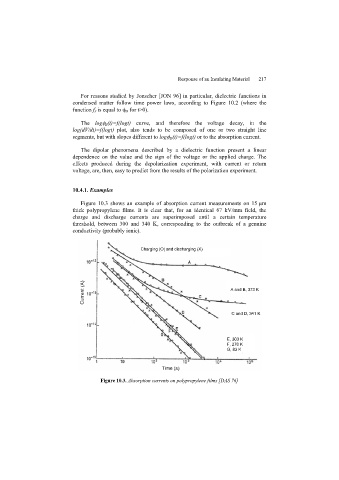
206  3 / Algorithms


                                                THE HISTORY OF BIG-O NOTATION Big-O notation has been used in mathematics for
                                                more than a century. In computer science it is widely used in the analysis of algorithms, as
                                                will be seen in Section 3.3. The German mathematician Paul Bachmann first introduced big-O
                                                notation in 1892 in an important book on number theory. The big-O symbol is sometimes called
                                                a Landau symbol after the German mathematician Edmund Landau, who used this notation
                                                throughout his work. The use of big-O notation in computer science was popularized by Donald
                                                Knuth, who also introduced the big-  and big-  notations defined later in this section.

                                                WORKING WITHTHE DEFINITION OF BIG-O NOTATION A useful approach for find-
                                                ing a pair of witnesses is to first select a value of k for which the size of |f(x)| can be readily
                                                estimated when x> k and to see whether we can use this estimate to find a value of C for which
                                                |f(x)|≤ C|g(x)| for x> k. This approach is illustrated in Example 1.


                                                                 2
                                                                                 2
                                 EXAMPLE 1      Show that f(x) = x + 2x + 1is O(x ).
                                                Solution: We observe that we can readily estimate the size of f(x) when x> 1 because x< x 2
                                                         2
                                                and 1 <x when x> 1. It follows that

                                                         2
                                                                                2
                                                                            2
                                                                      2
                                                    0 ≤ x + 2x + 1 ≤ x + 2x + x = 4x  2
                                                whenever x> 1, as shown in Figure 1. Consequently, we can take C = 4 and k = 1 as witnesses
                                                                     2
                                                                                                     2
                                                                                       2
                                                to show that f(x) is O(x ). That is, f(x) = x + 2x + 1 < 4x whenever x> 1. (Note that it
                                                is not necessary to use absolute values here because all functions in these equalities are positive
                                                when x is positive.)
                                                    Alternatively, we can estimate the size of f(x) when x> 2. When x> 2, we have 2x ≤ x 2
                                                         2
                                                and 1 ≤ x . Consequently, if x> 2, we have
                                                                      2
                                                                                     2
                                                                               2
                                                                           2
                                                         2
                                                    0 ≤ x + 2x + 1 ≤ x + x + x = 3x .
                                                                                                                 2
                                                It follows that C = 3 and k = 2 are also witnesses to the relation f(x) is O(x ).
                                                                     2
                                                               4x 2  x +2x +1     x 2


                                                4


                                                3                                                            2
                                                                                        The part of the graph of f(x) = x +2x +1
                                                                                                      2
                                                                                        that satisfies f(x) < 4x  is shown in blue.
                                                2


                                                                               2
                                                                     2
                                                1                   x +2x + 1<4x for x >1


                                                                1             2
                                                                          2
                                                                                         2
                                                FIGURE 1 The Function x + 2x + 1is O(x ).

