


Page 354 - E-Bussiness and E-Commerce Management Strategy, Implementation, and Practice
P. 354
M05_CHAF9601_04_SE_C05.QXD:D01_CHAF7409_04_SE_C01.QXD  16/4/09  11:12  Page 321


                                                                                 Chapter 5 E-business strategy  321


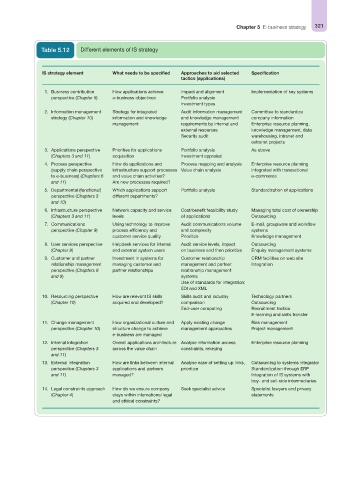
                    Table 5.12  Different elements of IS strategy


                    IS strategy element   What needs to be specified  Approaches to aid selected  Specification
                                                                tactics (applications)
                     1. Business contribution  How applications achieve  Impact and alignment  Implementation of key systems
                       perspective (Chapter 5)  e-business objectives  Portfolio analysis
                                                                Investment types
                     2. Information management  Strategy for integrated  Audit information management  Committee to standardize
                       strategy (Chapter 10)  information and knowledge  and knowledge management  company information
                                          management            requirements by internal and  Enterprise resource planning,
                                                                external resources    knowledge management, data
                                                                Security audit        warehousing, intranet and
                                                                                      extranet projects
                     3. Applications perspective  Priorities for applications  Portfolio analysis  As above
                       (Chapters 3 and 11)  acquisition         Investment appraisal
                     4. Process perspective  How do applications and  Process mapping and analysis  Enterprise resource planning
                       (supply chain perspective  infrastructure support processes Value chain analysis  integrated with transactional
                       to e-business) (Chapters 6  and value chain activities?        e-commerce
                       and 11)            Are new processes required?
                     5. Departmental (functional)  Which applications support  Portfolio analysis  Standardization of applications
                       perspective (Chapters 3  different departments?
                       and 10)
                     6. Infrastructure perspective  Network capacity and service  Cost/benefit feasibility study  Managing total cost of ownership
                       (Chapters 3 and 11)  levels              of applications       Outsourcing
                     7. Communications    Using technology to improve  Audit communications volume  E-mail, groupware and workflow
                       perspective (Chapter 9)  process efficiency and  and complexity  systems
                                          customer service quality  Prioritize        Knowledge management
                     8. User services perspective  Helpdesk services for internal  Audit service levels, impact  Outsourcing
                       (Chapter 9)        and external system users  on business and then prioritize  Enquiry management systems
                     9. Customer and partner  Investment in systems for  Customer relationship  CRM facilities on web site
                       relationship management  managing customer and  management and partner  Integration
                       perspective (Chapters 6  partner relationships  relationship management
                       and 9)                                   systems
                                                                Use of standards for integration:
                                                                EDI and XML
                    10. Resourcing perspective  How are relevant IS skills  Skills audit and industry  Technology partners
                       (Chapter 10)       acquired and developed?  comparison         Outsourcing
                                                                End-user computing    Recruitment tactics
                                                                                      E-learning and skills transfer
                    11. Change management  How organizational culture and  Apply existing change  Risk management
                       perspective (Chapter 10)  structure change to achieve  management approaches  Project management
                                          e-business are managed
                    12. Internal integration  Overall applications architecture  Analyse information access  Enterprise resource planning
                       perspective (Chapters 3  across the value chain  constraints, rekeying
                       and 11)
                    13. External integration  How are links between internal  Analyse ease of setting up links,  Outsourcing to systems integrator
                       perspective (Chapters 3  applications and partners  prioritize  Standardization through ERP
                       and 11)            managed?                                    Integration of IS systems with
                                                                                      buy- and sell-side intermediaries
                    14. Legal constraints approach  How do we ensure company  Seek specialist advice  Specialist lawyers and privacy
                       (Chapter 4)        stays within international legal            statements
                                          and ethical constraints?

