


Page 144 - Encyclopedia of Chemical Compounds 3 Vols
P. 144
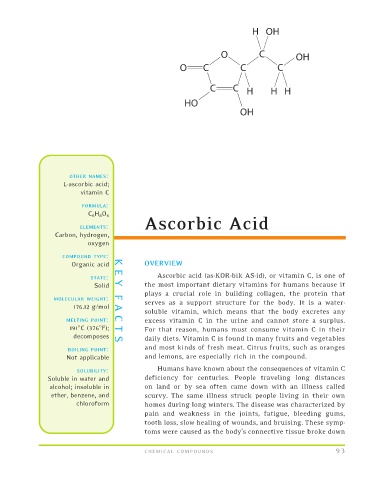
H   OH


                                                              O          C         OH
                                                   O     C          C         C


                                                           C      C  H      H H
                                                    HO
                                                                    OH


                    OTHER NAMES:
                   L-ascorbic acid;
                       vitamin C
                        FORMULA:
                         C 6 H 8 O 6
                                         Ascorbic Acid
                       ELEMENTS:
                Carbon, hydrogen,
                         oxygen

                     Organic acid        OVERVIEW
                                             Ascorbic acid (as-KOR-bik AS-id), or vitamin C, is one of
                  COMPOUND TYPE: KE
                           Solid         the most important dietary vitamins for humans because it
                          STATE: Y
                                         plays a crucial role in building collagen, the protein that
                MOLECULAR WEIGHT:  F
                                         serves as a support structure for the body. It is a water-
                     176.12 g/mol  A
                                         soluble vitamin, which means that the body excretes any
                   MELTING POINT:  C     excess vitamin C in the urine and cannot store a surplus.


                    191 C (376 F);  T    For that reason, humans must consume vitamin C in their
                     decomposes  S       daily diets. Vitamin C is found in many fruits and vegetables
                    BOILING POINT:       and most kinds of fresh meat. Citrus fruits, such as oranges
                   Not applicable        and lemons, are especially rich in the compound.
                      SOLUBILITY:            Humans have known about the consequences of vitamin C
              Soluble in water and       deficiency for centuries. People traveling long distances
               alcohol; insoluble in     on land or by sea often came down with an illness called
               ether, benzene, and       scurvy. The same illness struck people living in their own
                      chloroform         homes during long winters. The disease was characterized by
                                         pain and weakness in the joints, fatigue, bleeding gums,
                                         tooth loss, slow healing of wounds, and bruising. These symp-
                                         toms were caused as the body’s connective tissue broke down


                                         CHEMICAL COMPOUNDS                                   93

