


Page 188 - Encyclopedia of Chemical Compounds 3 Vols
P. 188
CH  3

                                                    H          N         N          O
                                                          C         C         C


                                                 H C      N         C         N
                                                   3
                                                                          C         CH 3

                                                                          O


                    OTHER NAMES:
               Methyltheobromine;
                          theine
                        FORMULA:
                       C 8 H 10 N 4 O 2
                       ELEMENTS:         Caffeine
                Carbon, hydrogen,
                 nitrogen, oxygen
                  COMPOUND TYPE:
                                         OVERVIEW
                        (alkaloid)
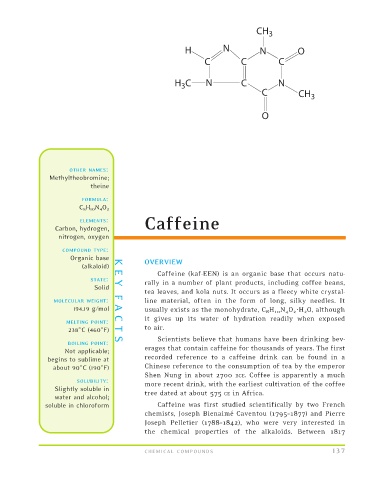
                                             Caffeine (kaf-EEN) is an organic base that occurs natu-
                    Organic base KE
                          STATE:
                                         rally in a number of plant products, including coffee beans,
                           Solid
                                 Y
                                         tea leaves, and kola nuts. It occurs as a fleecy white crystal-
                MOLECULAR WEIGHT:  F     line material, often in the form of long, silky needles. It
                     194.19 g/mol  A     usually exists as the monohydrate, C 8 H 10 N 4 O 2 H 2 O, although
                                         it gives up its water of hydration readily when exposed
                   MELTING POINT:
                                 C
                                         to air.
                    238 C (460 F)  T
                                             Scientists believe that humans have been drinking bev-
                    BOILING POINT:
                                 S
                                         erages that contain caffeine for thousands of years. The first
                   Not applicable;
                                         recorded reference to a caffeine drink can be found in a
              begins to sublime at


                about 90 C (190 F)       Chinese reference to the consumption of tea by the emperor
                                         Shen Nung in about 2700 BCE. Coffee is apparently a much
                      SOLUBILITY:
                                         more recent drink, with the earliest cultivation of the coffee
                Slightly soluble in
                                         tree dated at about 575 CE in Africa.
                water and alcohol;
              soluble in chloroform          Caffeine was first studied scientifically by two French
                                         chemists, Joseph Bienaime ´ Caventou (1795–1877) and Pierre
                                         Joseph Pelletier (1788–1842), who were very interested in
                                         the chemical properties of the alkaloids. Between 1817
                                         CHEMICAL COMPOUNDS                                  137

