


Page 398 - Academic Press Encyclopedia of Physical Science and Technology 3rd InOrganic Chemistry
P. 398
P1: GQT/GRI  P2: GTV/FFV  P3: GTV/FFV  QC: GSS  Final pages
 Encyclopedia of Physical Science and Technology  EN014A-653  July 28, 2001  20:55


               22                                                                           Rare Earth Elements and Materials


               as using less expensive starting feedstocks. This leads to
               the application of rare earth catalysts for the refinement of
               long-chained hydrocarbons to high-end monomers such
               as styrene. Cerium (as cerium carbonate) has traditionally
               been used in styrene monomer catalyst recipes as a cata-
               lyst promoter. Modern styrene monomer catalyst produc-
               ers are increasing the levels of cerium in recipes to make
               “higher”-activity and “higher”-yield catalysts as well as
               using cerium to displace more toxic components such as
               chromium.
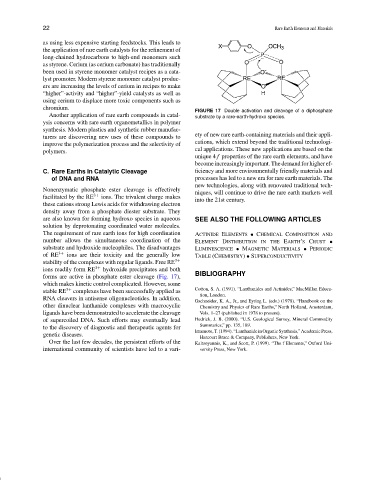
                                                                 FIGURE 17 Double activation and cleavage of a diphosphate
                 Another application of rare earth compounds in catal-  substrate by a rare-earth-hydroxo species.
               ysis concerns with rare earth organometallics in polymer
               synthesis. Modern plastics and synthetic rubber manufac-
                                                                 ety of new rare earth-containing materials and their appli-
               turers are discovering new uses of these compounds to
                                                                 cations, which extend beyond the traditional technologi-
               improve the polymerization process and the selectivity of
                                                                 cal applications. These new applications are based on the
               polymers.
                                                                 unique 4 f properties of the rare earth elements, and have
                                                                 become increasingly important. The demand for higher ef-
               C.  Rare Earths in Catalytic Cleavage             ficiency and more environmentally friendly materials and
                  of DNA and RNA                                 processes has led to a new era for rare earth materials. The
                                                                 new technologies, along with renovated traditional tech-
               Nonenzymatic  phosphate  ester  cleavage  is  effectively
                                3+                               niques, will continue to drive the rare earth markets well
               facilitated by the RE  ions. The trivalent charge makes
                                                                 into the 21st century.
               these cations strong Lewis acids for withdrawing electron
               density  away  from  a  phosphate  diester  substrate.  They
               are also known for forming hydroxo species in aqueous  SEE ALSO THE FOLLOWING ARTICLES
               solution by deprotonating coordinated water molecules.
               The requirement of rare earth ions for high coordination  ACTINIDE ELEMENTS • CHEMICAL COMPOSITION AND
               number  allows  the  simultaneous  coordination  of  the  ELEMENT DISTRIBUTION IN THE EARTH’S CRUST •
               substrate and hydroxide nucleophiles. The disadvantages  LUMINESCENCE • MAGNETIC MATERIALS • PERIODIC
                    3+
               of  RE  ions  are  their  toxicity  and  the  generally  low  TABLE (CHEMISTRY) • SUPERCONDUCTIVITY
               stability of the complexes with regular ligands. Free RE 3+
                                3+
               ions readily form RE  hydroxide precipitates and both
               forms  are  active  in  phosphate  ester  cleavage  (Fig.  17),  BIBLIOGRAPHY
               which makes kinetic control complicated. However, some
               stable RE 3+  complexes have been successfully applied as  Cotton, S. A. (1991). “Lanthanides and Actinides,” MacMillan Educa-
                                                                   tion, London.
               RNA cleavers in antisense oligonucleotides. In addition,
                                                                 Gschneider, K. A., Jr., and Eyring L. (eds.) (1978). “Handbook on the
               other dinuclear lanthanide complexes with macrocyclic  Chemistry and Physics of Rare Earths,” North Holland, Amsterdam,
               ligands have been demonstrated to accelerate the cleavage  Vols. 1–27 (published in 1978 to present).
               of supercoiled DNA. Such efforts may eventually lead  Hedrick, J. B. (2000). “U.S. Geological Survey, Mineral Commodity
               to the discovery of diagnostic and therapeutic agents for  Summaries,” pp. 135, 189.
                                                                 Imamoto,T.(1994).“LanthanideinOrganicSynthesis,”AcademicPress,
               genetic diseases.
                                                                   Harcourt Brace & Company, Publishers, New York.
                 Over the last few decades, the persistent efforts of the  Kaltsoyannis, K., and Scott, P. (1999). “The f Elements,” Oxford Uni-
               international community of scientists have led to a vari-  versity Press, New York.

