


Page 181 - Intelligent Communication Systems
P. 181
I 52     INTELLIGENT  COMMUNICATION SYSTEMS


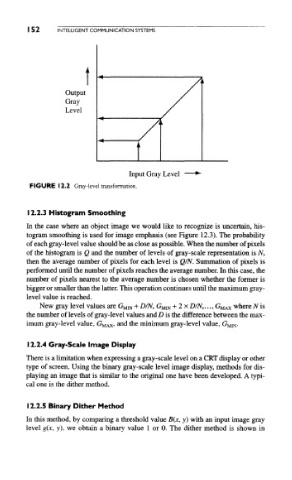
         FIGURE  12.2  Gray-level transformation.


        12.2.3  Histogram Smoothing

        In  the  case  where an object  image  we would like  to recognize  is uncertain,  his-
        togram smoothing  is used for image  emphasis  (see  Figure  12.3). The  probability
        of each gray-level value should be as close as possible. When the number of pixels
        of the histogram  is Q and the number of levels  of gray-scale  representation  is N,
        then the average  number of pixels for each level is  Q/N.  Summation  of pixels is
        performed until the number of pixels reaches the average number. In this case, the
        number of pixels  nearest to the  average  number is chosen  whether  the former is
        bigger or smaller than the latter. This operation continues until the maximum gray-
        level value is reached.
            New gray level values are G MIN + D/N, G MJN + 2 x D/N,...,  G MAX  where N is
        the number of levels of gray-level values and D is the difference between the max-
        imum gray-level value, G MAX, and the minimum gray-level value, G MIN.


        12.2.4 Gray-Scale Image  Display
        There is a limitation when expressing  a gray-scale level on a CRT display or other
        type of screen.  Using the binary gray-scale  level image display, methods  for dis-
        playing an image that is similar  to the original  one have been developed. A typi-
        cal one is the dither method.

        12.2.5 Binary Dither Method

        In this method, by comparing  a threshold  value B(x, y) with an input image gray
        level  g(x,  y),  we  obtain  a binary value  1 or  0. The  dither  method  is  shown in

