


Page 367 - Intelligent Digital Oil And Gas Fields
P. 367
308                                       Intelligent Digital Oil and Gas Fields


                       Midnight to 4 a.m.
                   - Automated analytics on op’s data  11 12 1
             11  12 1                 10  2
            10  2      - Intelligent alerting  3        3 p.m. to 4 p.m.
            9    3    - Gas lift and rod pump  9
             8  4     - Opportunity mapping  8  7  5  4  12 1  - Afternoon meeting
             7  5                       6     11    - Track and document FO actions  11  12 1
              6      - Actual vs target analytics  10  2             10  2
                   - Automated downtime and codes  9  3  - Track and document  9  3
                                              8   4   Maintenance, WO teams  4
                                               7  5                  8
                                                6      - Review optimization  7  5
                       7 a.m. to 9 a.m.                  opportunities  6
                       - Morning meetings               - Update targets
             11 12 1                  11 12 1
            10  2      - FO assignments  10  2          - Assess actions
            9   3  - Opportunity assessment for PbE  9  3  -  Assign night Crew FO actions
             8  4   - Actual vs target assessment  8  4
             7  5                      7  5
              6         - HSE issues    6
                        8 a.m. to 3 p.m.       11  12 1  4 p.m. to Midnight  11 12 1
                   - Continuous monitor of alarms and  10  2  - Update data base and analytics  10  2
                                              9   3      - Close tickets  9  3
                        field activities          4                  8   4
                                              8         - Uplift tracking
                     - Monitor wells (dynacards)  7  6  5  - Automated updating of data-  7  6  5
             11  12 1  - Well reviews as indicated  11  12 1
            10  2      - Monitor FO activity  10  2    driven analytic models
            9   3    - Communication with FO staff  9  3
            8   4                     8  4
             7  5  - Communication with maintenance,  7  6  5
              6
                         WO teams
                      - Opportunity execution
                    - Opportunity assessment for PbE
                      - Optimization strategy
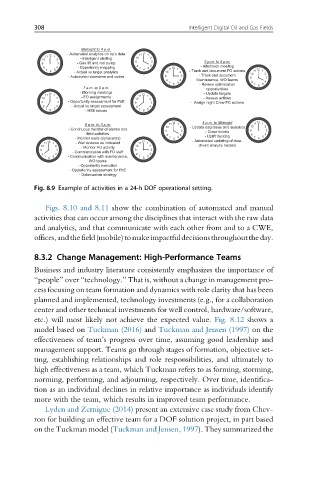
          Fig. 8.9 Example of activities in a 24-h DOF operational setting.
             Figs. 8.10 and 8.11 show the combination of automated and manual
          activities that can occur among the disciplines that interact with the raw data
          and analytics, and that communicate with each other from and to a CWE,
          offices,andthefield(mobile)tomakeimpactfuldecisionsthroughouttheday.
          8.3.2 Change Management: High-Performance Teams
          Business and industry literature consistently emphasizes the importance of
          “people” over “technology.” That is, without a change in management pro-
          cess focusing on team formation and dynamics with role clarity that has been
          planned and implemented, technology investments (e.g., for a collaboration
          center and other technical investments for well control, hardware/software,
          etc.) will most likely not achieve the expected value. Fig. 8.12 shows a
          model based on Tuckman (2016) and Tuckman and Jensen (1997) on the
          effectiveness of team’s progress over time, assuming good leadership and
          management support. Teams go through stages of formation, objective set-
          ting, establishing relationships and role responsibilities, and ultimately to
          high effectiveness as a team, which Tuckman refers to as forming, storming,
          norming, performing, and adjourning, respectively. Over time, identifica-
          tion as an individual declines in relative importance as individuals identify
          more with the team, which results in improved team performance.
             Lyden and Zernigue (2014) present an extensive case study from Chev-
          ron for building an effective team for a DOF solution project, in part based
          on the Tuckman model (Tuckman and Jensen, 1997). They summarized the

