


Page 372 - Intelligent Digital Oil And Gas Fields
P. 372
Transitioning to Effective DOF Enabled by Collaboration and Management of Change  311


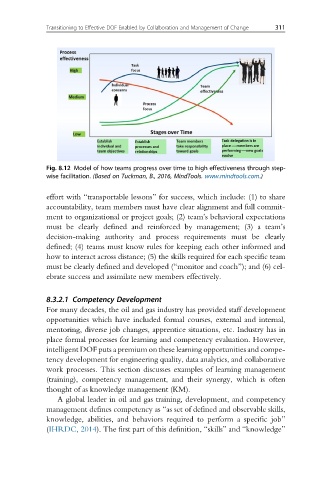
              Fig. 8.12 Model of how teams progress over time to high effectiveness through step-
              wise facilitation. (Based on Tuckman, B., 2016, MindTools. www.mindtools.com.)


              effort with “transportable lessons” for success, which include: (1) to share
              accountability, team members must have clear alignment and full commit-
              ment to organizational or project goals; (2) team’s behavioral expectations
              must be clearly defined and reinforced by management; (3) a team’s
              decision-making authority and process requirements must be clearly
              defined; (4) teams must know rules for keeping each other informed and
              how to interact across distance; (5) the skills required for each specific team
              must be clearly defined and developed (“monitor and coach”); and (6) cel-
              ebrate success and assimilate new members effectively.


              8.3.2.1 Competency Development
              For many decades, the oil and gas industry has provided staff development
              opportunities which have included formal courses, external and internal,
              mentoring, diverse job changes, apprentice situations, etc. Industry has in
              place formal processes for learning and competency evaluation. However,
              intelligent DOF puts a premium on these learning opportunities and compe-
              tency development for engineering quality, data analytics, and collaborative
              work processes. This section discusses examples of learning management
              (training), competency management, and their synergy, which is often
              thought of as knowledge management (KM).
                 A global leader in oil and gas training, development, and competency
              management defines competency as “as set of defined and observable skills,
              knowledge, abilities, and behaviors required to perform a specific job”
              (IHRDC, 2014). The first part of this definition, “skills” and “knowledge”

