


Page 374 - Intelligent Digital Oil And Gas Fields
P. 374
Transitioning to Effective DOF Enabled by Collaboration and Management of Change  313


              Training roadmap: Provide managers and technical professionals a structured
              road map for training to meet Corporate needs
              Workflow hierarchy     Course level definition
              Company needs (first level)  Basic:
                                       • Designed for both technical and business oriented professionals who
                                        are either new to the upstream oil and gas industry or experienced in
                                        one part, but could benefit from a wider point of view.
              Professional discipline (second level)
                                     Foundation:
                                       • Designed for individuals who have applied the skill taught in the basic
              Course discipline (third level)  course or those with at least some awareness of basic engineering
                                        and operations.
                                     Intermediate:
              Vendor (fourth level)    • Designed for individuals who require practical familiarity and
                                        fundamental insight of the course material. The user desires to put
                                        foundational skills into action with an emphasis on active learning
                                        and solving problems at a higher level.
              Courses (fifth level)
                                     Specialized:
                                       • Designed for individuals who have completed an intermediate course
                                        covering a similar topic or comparable training. courses are focused
                                        on a discipline specialty catered to experienced individuals that desire
                                        a mastering of skill who are going into or working within a
                                        specialized technical area.
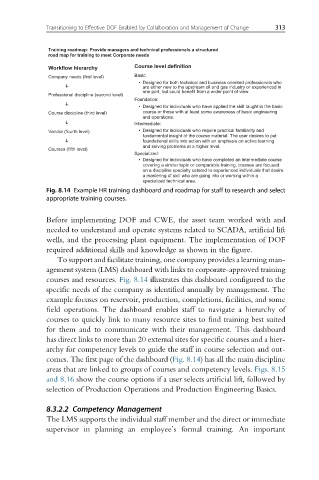
              Fig. 8.14 Example HR training dashboard and roadmap for staff to research and select
              appropriate training courses.
              Before implementing DOF and CWE, the asset team worked with and
              needed to understand and operate systems related to SCADA, artificial lift
              wells, and the processing plant equipment. The implementation of DOF
              required additional skills and knowledge as shown in the figure.
                 To support and facilitate training, one company provides a learning man-
              agement system (LMS) dashboard with links to corporate-approved training
              courses and resources. Fig. 8.14 illustrates this dashboard configured to the
              specific needs of the company as identified annually by management. The
              example focuses on reservoir, production, completions, facilities, and some
              field operations. The dashboard enables staff to navigate a hierarchy of
              courses to quickly link to many resource sites to find training best suited
              for them and to communicate with their management. This dashboard
              has direct links to more than 20 external sites for specific courses and a hier-
              archy for competency levels to guide the staff in course selection and out-
              comes. The first page of the dashboard (Fig. 8.14) has all the main discipline
              areas that are linked to groups of courses and competency levels. Figs. 8.15
              and 8.16 show the course options if a user selects artificial lift, followed by
              selection of Production Operations and Production Engineering Basics.

              8.3.2.2 Competency Management
              The LMS supports the individual staff member and the direct or immediate
              supervisor in planning an employee’s formal training. An important

