


Page 155 - Materials Chemistry, Second Edition
P. 155
138   LIFE CYCLE ASSESSMENT   HANDBOOK
                                              Data producers
                                                                LCA
                                                                tools


                         Subject matter experts
                                                Submit,
                                               edit &QA


                                                               Computation,
                                               Life Cycle     modeling, analysis
                                              Inventory (LCI)
               Administrators                                  & visualization


                                 Data consumers
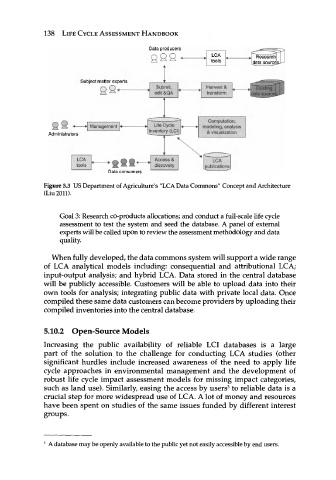
              Figure 5.3  US Department  of Agriculture's  "LCA Data Commons" Concept and Architecture
              (Liu 2011).


                   Goal 3: Research co-products allocations; and conduct a full-scale  life cycle
                   assessment  to  test  the  system  and  seed  the  database. A panel  of  external
                   experts will be called upon to review the assessment methodology and data
                   quality.


                 When fully developed, the data commons system will support  a wide  range
              of  LCA  analytical  models  including:  consequential  and  attributional  LCA;
              input-output  analysis;  and  hybrid  LCA.  Data  stored  in  the  central  database
              will  be  publicly  accessible.  Customers  will be  able  to  upload  data  into  their
              own  tools  for  analysis; integrating  public  data  with  private  local  data.  Once
              compiled these same data customers can become providers by uploading   their
              compiled  inventories into the central  database.


              5.10.2   Open-Source    Models

              Increasing  the  public  availability  of  reliable  LCI  databases  is  a  large
              part  of  the  solution  to  the  challenge  for  conducting  LCA  studies  (other
              significant  hurdles  include  increased  awareness  of  the  need  to  apply  life
              cycle  approaches  in  environmental  management   and  the  development  of
              robust  life  cycle  impact  assessment  models  for  missing  impact  categories,
                                                                     3
              such  as land  use). Similarly, easing  the  access by  users  to  reliable  data  is  a
              crucial step  for  more widespread  use  of  LCA. A lot  of money and  resources
              have  been  spent  on  studies  of  the  same  issues  funded  by  different  interest
              groups.


              3  A database may be openly available to the public yet not easily accessible by end users.

