


Page 653 - 04. Subyek Engineering Materials - Manufacturing, Engineering and Technology SI 6th Edition - Serope Kalpakjian, Stephen Schmid (2009)
P. 653
l-1 250ld
                               *§’f


                               Machining Processes: Turning and Hole Making
           3       Chapter 23   ‘i
                                                                                      """"'
                                                                             t Cam turret
                                                                              I
                                 Lead 100
                                                      24
                                              5
                                                                                  I ,
                                                                                     |

                                        mm          S"` “T                        4->        -
                                                                               Turning turret
                                        (8)                                  (D)


                                                                            12.7


                            i*---“ ----*i                             l*'-“75-*I
                                        mm                                mm


                                        (G)                                   (Cl)

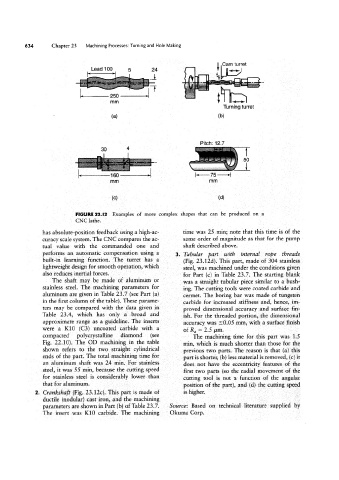
                            FIGURE 23.|2  Examples of more complex shapes that can be produced on a
                            CNC lathe.
                has absolute-position feedback using a high-ao   time was 25 min; note that this time is of the
                curacy scale system. The CNC compares the ac-    same order of magnitude as that for the pump
                tual value with the commanded one and            shaft described above.
                performs an automatic compensation using a       Tubuiar part with   internal rope  threads
                built~in learning function. The turret has a     (Fig. 23.12d). This part, made of 304 stainless
                lightweight design for smooth operation, which   steel, was machined under the conditions given
                also reduces inertial forces.                    for Part (C) in Table 23.7. The staiting blank
                   The shaft may be made of aluminum or          was a straight tubular piece similar to a bush-
                stainless steel. The machining parameters for    ing. The cutting tools were coated carbide and
                aluminum are given in Table 23.7 (see Part (a)   cermet. The boring bar was made of tungsten
                in the first column of the table). These parame-  carbide for increased stiffness and, hence, im-
                ters may be compared with the data given in      proved dimensional accuracy and surface fin-
                Table 23.4, which has only   a broad and         ish. For the threaded portion, the dimensional
                approximate range as a guideline. The inserts    accuracy was 10.05 mm, with a surface finish
                were a K10 (C3) uncoated carbide with a          of Ra = 2.5 um.
                compacted   polycrystalline  diamond  (see           The machining time for this part was 1.5
                Fig. 22.10). The OD machining in the table       min, which is much shorter than those for the
                shown refers to the two straight cylindrical     previous two parts. The reason is that (a) this
                ends of the part. The total machining time for   part is shorter, (b) less material is removed, (c) it
                an aluminum shaft was 24 min. For stainless      does not have the eccentricity features of the
                steel, it was 55 min, because the cutting speed  first two parts (so the radial movement of the
                for stainless steel is considerably lower than   cutting tool is not a function of the angular
                that for aluminum.                               position of the part), and (cl) the cutting speed
                Crankshaft (Fig. 23.12c). This part is made of   is higher.
                ductile (nodular) cast iron, and the machining
                parameters are shown in Part (b) of Table 23.7.  Source: Based on technical literature supplied by
                The insert was K10 carbide. The machining    Ckuma Corp.

