


Page 437 - Planning and Design of Airports
P. 437
Airport Drainage    377


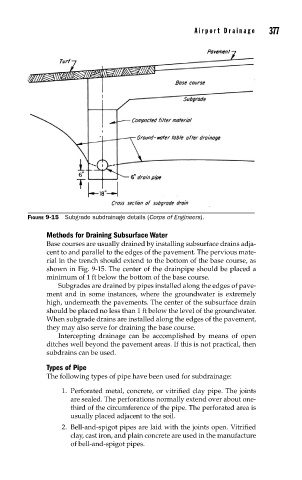
            FIGURE 9-15  Subgrade subdrainage details (Corps of Engineers).

                 Methods for Draining Subsurface Water
                 Base courses are usually drained by installing subsurface drains adja-
                 cent to and parallel to the edges of the pavement. The pervious mate-
                 rial in the trench should extend to the bottom of the base course, as
                 shown in Fig. 9-15. The center of the drainpipe should be placed a
                 minimum of 1 ft below the bottom of the base course.
                    Subgrades are drained by pipes installed along the edges of pave-
                 ment and in some instances, where the groundwater is extremely
                 high, underneath the pavements. The center of the subsurface drain
                 should be placed no less than 1 ft below the level of the groundwater.
                 When subgrade drains are installed along the edges of the pavement,
                 they may also serve for draining the base course.
                    Intercepting drainage can be accomplished by means of open
                 ditches well beyond the pavement areas. If this is not practical, then
                 subdrains can be used.

                 Types of Pipe
                 The following types of pipe have been used for subdrainage:

                      1.  Perforated metal, concrete, or vitrified clay pipe. The joints
                        are sealed. The perforations normally extend over about one-
                        third of the circumference of the pipe. The perforated area is
                        usually placed adjacent to the soil.
                      2.  Bell-and-spigot pipes are laid with the joints open. Vitrified
                        clay, cast iron, and plain concrete are used in the manufacture
                        of bell-and-spigot pipes.

