


Page 199 - Materials Chemistry, Second Edition
P. 199
Ch005-P373623.qxd  3/22/07  5:34 PM  Page 178
                     Sustainable Industrial Design and Waste Management
                178
                     Screen           Secondary          Primary         Waste glass
                       and             grinding          grinding         5–20 mm
                     classify         75–150  m          1–3 mm


                      Store


                                                Heat and
                      Weigh         Mix                       Anneal     Cut and size
                                                 foam

                     Foaming
                      agent
                    75–150  m
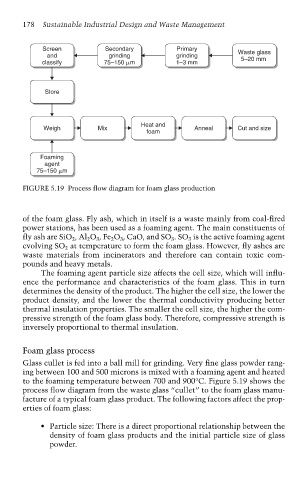
                FIGURE 5.19 Process flow diagram for foam glass production


                of the foam glass. Fly ash, which in itself is a waste mainly from coal-fired
                power stations, has been used as a foaming agent. The main constituents of
                fly ash are SiO , Al O , Fe O , CaO, and SO . SO is the active foaming agent
                                 2
                             2
                                    3
                                                        3
                                                            3
                                        2
                                          3
                evolving SO at temperature to form the foam glass. However, fly ashes are
                           2
                waste materials from incinerators and therefore can contain toxic com-
                pounds and heavy metals.
                     The foaming agent particle size affects the cell size, which will influ-
                ence the performance and characteristics of the foam glass. This in turn
                determines the density of the product. The higher the cell size, the lower the
                product density, and the lower the thermal conductivity producing better
                thermal insulation properties. The smaller the cell size, the higher the com-
                pressive strength of the foam glass body. Therefore, compressive strength is
                inversely proportional to thermal insulation.
                Foam glass process
                Glass cullet is fed into a ball mill for grinding. Very fine glass powder rang-
                ing between 100 and 500 microns is mixed with a foaming agent and heated
                to the foaming temperature between 700 and 900°C. Figure 5.19 shows the
                process flow diagram from the waste glass “cullet” to the foam glass manu-
                facture of a typical foam glass product. The following factors affect the prop-
                erties of foam glass:

                     • Particle size: There is a direct proportional relationship between the
                       density of foam glass products and the initial particle size of glass
                       powder.

