


Page 149 - The CNN Effect in Action - How the News Media Pushed the West toward War ini Kosovo
P. 149
1403975191ts07.qxd 19-2-07 05:08 PM Page 117
Table 6.6 Continued
Week Beginning
Total
Options
3
2
1
7
September 20
0
8
1
0
0
1
1
September 27
7
7
0
0
October 4
0
4
6
10
October 11
0
October 18
0
1
1
0
4
1
5
October 25
November 1
0
0
0
0
0
1
2
1
November 8
1
November 15
1
0
0
November 22
0
0
0
0
1
1
0
0
November 29
0
1
December 6
0
1
1
0
December 13
3
2
0
2
2
December 20
0
0
0
December 27
0
0
0
January 3
0
0
0
January 10
0
2
1
1
8
0
0
January 17
8
2
8
6
January 24
0
0
4
2
2
January 31 THE KOSOVO CRISIS—THE MACRO REVIEW 117
February 7 0 2 5 7
February 14 0 4 4 8
February 21 0 4 7 11
February 28 0 0 0 0
March 7 0 3 1 4
March 14 0 5 2 7
March 21 0 6 0 6
Total 2 92 67 161
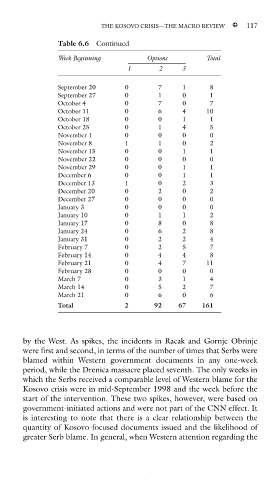
by the West. As spikes, the incidents in Racak and Gornje Obrinje
were first and second, in terms of the number of times that Serbs were
blamed within Western government documents in any one-week
period, while the Drenica massacre placed seventh. The only weeks in
which the Serbs received a comparable level of Western blame for the
Kosovo crisis were in mid-September 1998 and the week before the
start of the intervention. These two spikes, however, were based on
government-initiated actions and were not part of the CNN effect. It
is interesting to note that there is a clear relationship between the
quantity of Kosovo-focused documents issued and the likelihood of
greater Serb blame. In general, when Western attention regarding the

