


Page 155 - An Indispensible Resource for Being a Credible Activist
P. 155
hour on October 1, 2008. An additional increase, to $7.50 per hour, is scheduled for October
                       1, 2009. In an amendment to the New Mexico Minimum Wage Act, the definitions of
                       “employer” and “employee” were changed to exclude State and political subdivisions from
                       all parts of the Act except the section that sets the minimum wage. Illinois, Kentucky,
                       Michigan, and West Virginia increased their required hourly minimum-wage rates on July
                       1, 2008. The Illinois rate was increased from $7.50 per hour to $7.75, Kentucky increased
                       its rate from $5.85 per hour to $6.55, Michigan increased its required rate from $7.15 per
                       hour to $7.40, and the West Virginia required rate was increased from $6.55 per hour to
                       $7.25.
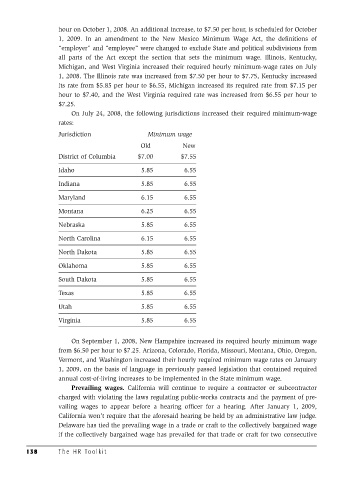
                          On July 24, 2008, the following jurisdictions increased their required minimum-wage
                       rates:
                       Jurisdiction             Minimum wage
                                              Old        New
                       District of Columbia  $7.00       $7.55
                       Idaho                  5.85        6.55

                       Indiana                5.85        6.55
                       Maryland               6.15        6.55
                       Montana                6.25        6.55

                       Nebraska               5.85        6.55
                       North Carolina         6.15        6.55
                       North Dakota           5.85        6.55

                       Oklahoma               5.85        6.55
                       South Dakota           5.85        6.55
                       Texas                  5.85        6.55

                       Utah                   5.85        6.55
                       Virginia               5.85        6.55


                          On September 1, 2008, New Hampshire increased its required hourly minimum wage
                       from $6.50 per hour to $7.25. Arizona, Colorado, Florida, Missouri, Montana, Ohio, Oregon,
                       Vermont, and Washington increased their hourly required minimum wage rates on January
                       1, 2009, on the basis of language in previously passed legislation that contained required
                       annual cost-of-living increases to be implemented in the State minimum wage.
                          Prevailing wages.  California will continue to require a contractor or subcontractor
                       charged with violating the laws regulating public-works contracts and the payment of pre-
                       vailing wages to appear before a hearing officer for a hearing. After January 1, 2009,
                       California won’t require that the aforesaid hearing be held by an administrative law judge.
                       Delaware has tied the prevailing wage in a trade or craft to the collectively bargained wage
                       if the collectively bargained wage has prevailed for that trade or craft for two consecutive

              138      The H R Toolkit

