


Page 121 - The Handbook of Persuasion and Social Marketing
P. 121
114                           The Handbook of Persuasion and Social Marketing


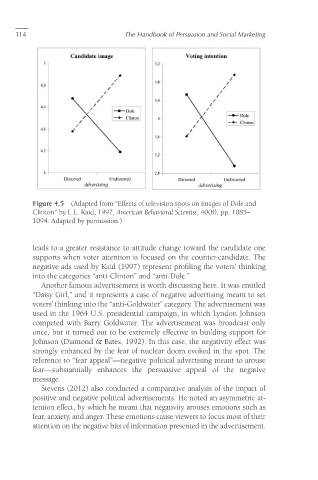
            Figure 4.5  (Adapted from “Effects of television spots on images of Dole and
            Clinton” by L.L. Kaid, 1997, American Behavioral Scientist, 40(8), pp. 1085–
            1094. Adapted by permission.)


            leads to a greater resistance to attitude change toward the candidate one
            supports when voter attention is focused on the counter-candidate. The
            negative ads used by Kaid (1997) represent profiling the voters’ thinking
            into the categories “anti-Clinton” and “anti-Dole.”
              Another famous advertisement is worth discussing here. It was entitled
            “Daisy Girl,” and it represents a case of negative advertising meant to set
            voters’ thinking into the “anti-Goldwater” category. The advertisement was
            used in the 1964 U.S. presidential campaign, in which Lyndon Johnson
            competed with Barry Goldwater. The advertisement was broadcast only
            once, but it turned out to be extremely effective in building support for
            Johnson (Diamond & Bates, 1992). In this case, the negativity effect was
            strongly enhanced by the fear of nuclear doom evoked in the spot. The
            reference to “fear appeal”—negative political advertising meant to arouse
            fear—substantially enhances the persuasive appeal of the negative
            message.
              Stevens (2012) also conducted a comparative analysis of the impact of
            positive and negative political advertisements. He noted an asymmetric at-
            tention effect, by which he meant that negativity arouses emotions such as
            fear, anxiety, and anger. These emotions cause viewers to focus most of their
            attention on the negative bits of information presented in the advertisement.

