


Page 370 - Analysis and Design of Machine Elements
P. 370
Analysis and Design of Machine Elements
                   348
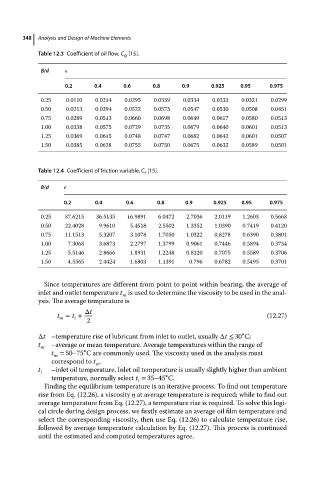
                       Table 12.3 Coefficient of oil flow, C [15].
                                                Q
                        B/d
                               0.2      0.4     0.6     0.8      0.9     0.925    0.95    0.975
                        0.25   0.0110   0.0214  0.0295   0.0339  0.0334   0.0332  0.0321  0.0299
                        0.50   0.0213   0.0394  0.0522   0.0573  0.0547   0.0530  0.0508  0.0451
                        0.75   0.0289   0.0513  0.0660   0.0698  0.0649   0.0617  0.0580  0.0513
                        1.00   0.0338   0.0575  0.0729   0.0735  0.0679   0.0640  0.0601  0.0513
                        1.25   0.0369   0.0615  0.0748   0.0747  0.0682   0.0642  0.0601  0.0507
                        1.50   0.0385   0.0628  0.0755   0.0750  0.0675   0.0632  0.0589  0.0501


                       Table 12.4 Coefficient of friction variable, C [15].
                                                      f
                        B/d

                               0.2      0.4      0.6      0.8     0.9     0.925   0.95    0.975
                        0.25   87.6215  36.5135  16.9891  6.0472  2.7036  2.0119  1.2603  0.5668
                        0.50   22.4028   9.9610   5.4518  2.5502  1.3352  1.0390  0.7419  0.4120
                        0.75   11.1513   5.3207   3.1078  1.7050  1.0322  0.8278  0.6390  0.3801

                        1.00    7.3068   3.6873   2.2797  1.3799  0.9061  0.7446  0.5894  0.3754
                        1.25    5.5146   2.8666   1.8931  1.2248  0.8220  0.7075  0.5589  0.3706
                        1.50    4.5565   2.4424   1.6803  1.1391   0.796  0.6782  0.5495  0.3701


                         Since temperatures are different from point to point within bearing, the average of
                       inlet and outlet temperature t is used to determine the viscosity to be used in the anal-
                                                m
                       ysis. The average temperature is
                                     Δt
                             t = t +                                                     (12.27)
                              m   i
                                     2
                                                                                  ∘
                       Δt –temperature rise of lubricant from inlet to outlet, usually Δt ≤ 30 C;
                       t   –average or mean temperature. Average temperatures within the range of
                        m
                                    ∘
                           t = 50–75 C are commonly used. The viscosity used in the analysis must
                            m
                           correspond to t .
                                        m
                       t i  –inlet oil temperature. Inlet oil temperature is usually slightly higher than ambient
                                                            ∘
                           temperature, normally select t = 35–45 C.
                                                    i
                         Finding the equilibrium temperature is an iterative process. To find out temperature
                       rise from Eq. (12.26), a viscosity    at average temperature is required; while to find out
                       average temperature from Eq. (12.27), a temperature rise is required. To solve this logi-
                       cal circle during design process, we firstly estimate an average oil film temperature and
                       select the corresponding viscosity, then use Eq. (12.26) to calculate temperature rise,
                       followed by average temperature calculation by Eq. (12.27). This process is continued
                       until the estimated and computed temperatures agree.

