


Page 333 - Applied Process Design for Chemical and Petrochemical Plants Volume I
P. 333
304                       Applied Process Design for Chemical and Petrochemical Plants


                                                                   Diameter,  D =                              (5 - 33)


                                                                  Where using consistent units:

                                                                   P = impeller power draw, F L/t or MLz/t3
                                                                    t = time
                                                                   L = length
                                                                    F = fluid force on turbine, perpendicular to shaft, ML/t‘
                                                                   D = impeller diameter, L
                                                                   Q = volumetric flow, L3/t
                                                                   T = tank diameter, L
                                                                    p = fluid density, M/L3
                                                                    p = fluid viscosity, M/ (Lt)
                                                                    z = torque, FL, or ML2/t2
                                                                    Z = liquid depth
                     Rotio of  Tonk  Diamtt~rllmprlltr Diomcttr    N,  = power number, dimensionless,
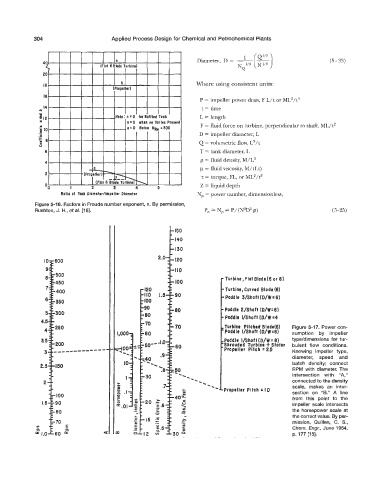
             Figure 5-16.  Factors in Froude number exponent, n. By permission,
             Rushton, J. H., et a/. [18].                            Po = N,  = P/(N3D5 p)                     (5-25)


                                                           150
                                                           140
                                                           130


                                                                          - Turbine, Flat Blade(6 or 8)
                                                           100
                                                                           - Turbine, Curved Blade (6)
                                                                           -Paddle  3/Shaft(O/W=6)

                                                                           -Paddle  2/Shoft  (O/W=6)
                                                                           -Paddle  I/Shaft  (D/W:4
                                                                           -Turbine  Pitched Blodd6)   Figure 5-17.  Power con-
                                                                           -Poddie  I/Shaft  (D/W=61   sumption  by  impeller
                                                                           ,Paddle  VShoft (O/W = 8)   type/dimensions  for  tur-
                                                                           :Shrouded  Turbine + Stator   bulent  flow  conditions.
                                                                            Propeller  Pitch = 20   Knowing  impeller  type,
                                                                                                  diameter,  speed  and
                                                                                                  batch  density;  connect
                                                                                                  RPM with  diameter.  The
                                                                                                  intersection  with  “A,”
                                                                                                  connected to the density
                                                                                                  scale,  makes  an  inter-
                                                                                                  section  on  “B.”  A  line
                                                                                                  from  this  point  to  the
                                                                                                  impeller scale intersects
                                                                                                  the horsepower scale at
                                                                                                  the correct value. By per-
                                                                                                  mission,  Quillen,  C.  S.,
                                                                                                  Chem. Engr,  June 1954,
                                    4                                                             p. 177 [15].

