


Page 202 - Appreciative Leadership
P. 202
The Path of Integrity  175


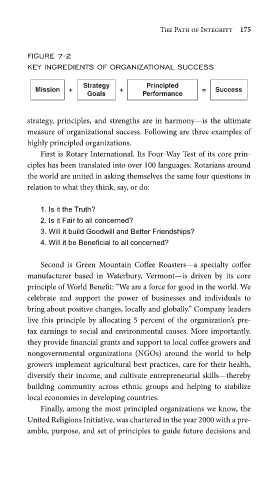
        FIGURE 7-2
        KEY INGREDIENTS OF ORGANIZATIONAL SUCCESS

                        Strategy         Principled
           Mission  +            +                      =  Success
                         Goals          Performance


        strategy, principles, and strengths are in harmony—is the ultimate
        measure of organizational success. Following are three examples of
        highly principled organizations.
            First is Rotary International. Its Four-Way Test of its core prin-
        ciples has been translated into over 100 languages. Rotarians around
        the world are united in asking themselves the same four questions in
        relation to what they think, say, or do:


            1. Is it the Truth?
            2. Is it Fair to all concerned?
            3. Will it build Goodwill and Better Friendships?
            4. Will it be Benefi cial to all concerned?


            Second is Green Mountain Coffee Roasters—a specialty coff ee
        manufacturer based in Waterbury, Vermont—is driven by its core

        principle of World Benefit: “We are a force for good in the world. We
        celebrate and support the power of businesses and individuals to
        bring about positive changes, locally and globally.” Company leaders
        live this principle by allocating 5 percent of the organization’s pre-
        tax earnings to social and environmental causes. More importantly,
        they provide financial grants and support to local coffee growers and


        nongovernmental organizations (NGOs) around the world to help
        growers implement agricultural best practices, care for their health,
        diversify their income, and cultivate entrepreneurial skills—thereby
        building community across ethnic groups and helping to stabilize
        local economies in developing countries.
            Finally, among the most principled organizations we know, the
        United Religions Initiative, was chartered in the year 2000 with a pre-
        amble, purpose, and set of principles to guide future decisions and

