


Page 591 - Battery Reference Book
P. 591
Nickel-cadmium secondary batteries  51/29
       When  charged  they  should  be  handled  with  care  to
       avoid short-circuits because the short-circuit current is
       very  high.  When  storing  for  more  than  6  months  a
       storage temperature lower than  15°C is recommended
       by  the manufacturers.                       -
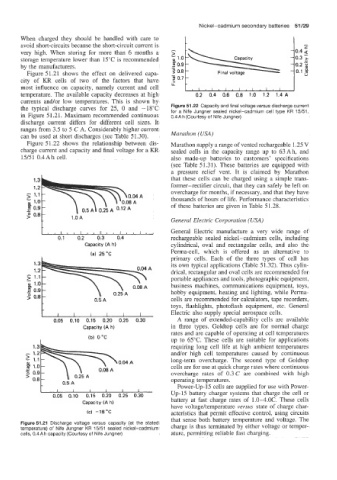
         Figure 51.21  shows  the  effect  on  delivered  capa-   9 0.8
       city  of  KR  cells  of  two  of  the  factors  that  have   0.7
       most  influence on  capacity,  namely  current  and  cell   U
       temperature. The available capacity decreases at high   0.2   0.4   0.6   0.8  1.0  1.2   1.4 A
       currents  and/or  low  temperatures.  This  is  shown  by
       the  typical  discharge  curves  for  25,  0  and  -18°C   Figure 51.22  Capacity and final voltage versus discharge current
                                                   for  a Nife Jungner sealed nickel-cadmium  cell type KR  15/51,
       in Figure 5  1.21. Maximum recommended continuous   0.4Ah (Courtesy of Nife Jungner)
       discharge  current  differs  for  different  cell  sizes.  It
       ranges from 3.5 to 5 C A. Considerably higher current
       can be used at short discharges (see Table 51.30).   Marathon (USA)
         Figure 51.22  shows  the  relationship  between  dis-   Marathon supply a range of vented rechargeable 1.25 V
       charge current and capacity and final voltage for a KR   sealed  cells  in  the  capacity range  up  to  53Ah, and
       15/51 0.4Ah cell.                           also  made-up  batteries  to  customers'  specifications
                                                   (see Table 51.31). These  batteries  are  equipped  with
                                                   a  pressure  relief  vent.  It  is  claimed  by  Marathon
           1.3                                     that these cells can be  charged using  a simple trans-
           1.2                                     former-rectifier  circuit, that they can safely be left on
         -                                         overcharge for months, if necessary, and that they have
         5 1.1
         0  1.0                                    thousands of hours of life. Performance characteristics
         E 0.9
         -                                         of  these batteries are given in Table 51.28.
         3 0.8
                                                   General Electric Corporation (USA)
                                                   General  Electric  manufacture  a  very  wide  range  of
                   1  1  1  1  1  1  1  1  1  1  1  1  1  1  ,
                  0.1   0.2   0.3   0.4            rechargeable  sealed nickel-cadmium  cells, including
                          Capacity (A h)           cylindrical,  oval  and  rectangular  cells,  and  also  the
                            (a)  25 'C             Perma-cell,  which  is  offered  as  an  alternative  to
                                                   primary  cells.  Each  of  the  three  types  of  cell  has
           1.3                                     its own typical applications (Table 5 1.32). Thus cylin-
         -  1.2                                    drical, rectangular and oval cells are recommended for
         -                                         portable appliances and tools, photographic equipment,
         >  1.1
         g 1.0                                     business machines, communications equipment, toys,
         - i? 0.9                                  hobby equipment, heating and lighting, while Perma-
         3 0.8                                     cells are recommended for calculators, tape recorders,
                                                   toys,  flashlights, photoflash  equipment,  etc.  General
                                                   Electric also supply special aerospace cells.
                  I    I    I    I   1    I
                 0.05  0.10  0.15   0.20  0.25   0.30   A  range  of  extended-capability cells  are  available
                          Capacity (A h)           in  three  types.  Goldtop  cells  are  for  normal  charge
                                                   rates and are capable of operating at cell temperatures
                           (b) 0°C                 up  to  65°C. These  cells  are  suitable for  applications
           1.3                                     requiring long cell life  at high  ambient temperatures
         - 1.2                                     and/or  high  cell  temperatures  caused  by  continuous
         >
         - 1.1                                     long-term  overcharge.  The  second  type  of  Goldtop
         (u                         0.04 A
         p 1.0                                     cells are for use at quick charge rates where continuous
         c
         ;5  0.9                                   overcharge  rates  of  0.3C  are  combined  with  high
         >
           0.8                                     operating temperatures.
                                                     Power-Up-15 cells are supplied for use with Power-
                                     I    I        Up-15 battery charger systems that charge the cell or
                 0.05  0.10   0.15  0.20   0.25  0.30   battery  at fast  charge rates  of  1.0-4.OC.  These cells
                         Capacity (Ah)
                                                   have voltage/temperature versus  state of  charge char-
                           (c)  -18°C              acteristics that permit effective control, using circuits
                                                   that  sense both battery temperature  and voltage. The
       Figure 51.21  Discharge voltage  versus  capacity  (at the  stated
       temperature) ol' Nife Jungner KR 15/51 sealed nickel-cadmium   charge is thus terminated by either voltage or temper-
       cells, 0.4Ah capacity (Courtesy of Nife Jungner)   ature, permitting reliable fast charging.

