


Page 308 - Buried Pipe Design
P. 308
Rigid Pipe Products  279

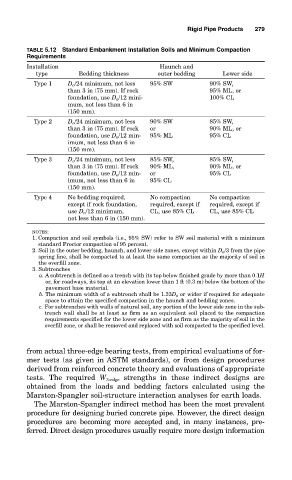
         TABLE 5.12 Standard Embankment Installation Soils and Minimum Compaction
         Requirements
         Installation                         Haunch and
            type        Bedding thickness    outer bedding     Lower side
           Type 1    D o /24 minimum, not less   95% SW    90% SW,
                     than 3 in (75 mm). If rock            95% ML, or
                     foundation, use D o /12 mini-         100% CL
                     mum, not less than 6 in
                     (150 mm).
           Type 2    D o /24 minimum, not less   90% SW    85% SW,
                     than 3 in (75 mm). If rock   or       90% ML, or
                     foundation, use D o /12 min-  95% ML  95% CL
                     imum, not less than 6 in
                     (150 mm).
           Type 3    D o /24 minimum, not less   85% SW,     85% SW,
                     than 3 in (75 mm). If rock   90% ML,  90% ML, or
                     foundation, use D o /12 min-  or      95% CL
                     imum, not less than 6 in   95% CL
                     (150 mm).
           Type 4    No bedding required,   No compaction   No compaction
                     except if rock foundation,  required, except if   required, except if
                     use D o /12 minimum,  CL, use 85% CL  CL, use 85% CL
                     not less than 6 in (150 mm).
           NOTES:
           1. Compaction and soil symbols (i.e., 95% SW) refer to SW soil material with a minimum
             standard Proctor compaction of 95 percent.
           2. Soil in the outer bedding, haunch, and lower side zones, except within D o /3 from the pipe
             spring line, shall be compacted to at least the same compaction as the majority of soil in
             the overfill zone.
           3. Subtrenches
             a. A subtrench is defined as a trench with its top below finished grade by more than 0.1H
               or, for roadways, its top at an elevation lower than 1 ft (0.3 m) below the bottom of the
               pavement base material.
             b. The minimum width of a subtrench shall be 1.33D o or wider if required for adequate
              space to attain the specified compaction in the haunch and bedding zones.
             c. For subtrenches with walls of natural soil, any portion of the lower side zone in the sub-
              trench wall shall be at least as firm as an equivalent soil placed to the compaction
              requirements specified for the lower side zone and as firm as the majority of soil in the
              overfill zone, or shall be removed and replaced with soil compacted to the specified level.


         from actual three-edge bearing tests, from empirical evaluations of for-
         mer tests (as given in ASTM standards), or from design procedures
         derived from reinforced concrete theory and evaluations of appropriate
         tests. The required  W 3-edge strengths in these indirect designs are
         obtained from the loads and bedding factors calculated using the
         Marston-Spangler soil-structure interaction analyses for earth loads.
           The Marston-Spangler indirect method has been the most prevalent
         procedure for designing buried concrete pipe. However, the direct design
         procedures are becoming more accepted and, in many instances, pre-
         ferred. Direct design procedures usually require more design information

