


Page 179 -
P. 179
178  Part II  •  Descriptive Analytics


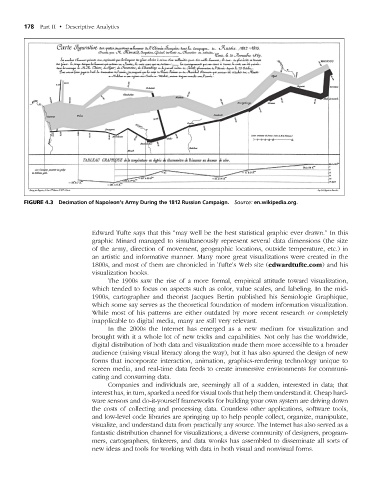
                figuRe 4.3  Decimation of Napoleon’s Army During the 1812 Russian Campaign.  Source: en.wikipedia.org.


                                    Edward Tufte says that this “may well be the best statistical graphic ever drawn.” In this
                                    graphic Minard managed to simultaneously represent several data dimensions (the size
                                    of the army, direction of movement, geographic locations, outside temperature, etc.) in
                                    an artistic and informative manner. Many more great visualizations were created in the
                                    1800s, and most of them are chronicled in Tufte’s Web site (edwardtufte.com) and his
                                    visualization books.
                                         The 1900s saw the rise of a more formal, empirical attitude toward visualization,
                                    which tended to focus on aspects such as color, value scales, and labeling. In the mid-
                                    1900s, cartographer  and theorist  Jacques Bertin published  his Semiologie Graphique,
                                    which some say serves as the theoretical foundation of modern information visualization.
                                    While most of his patterns are either outdated by more recent research or completely
                                    inapplicable to digital media, many are still very relevant.
                                         In the 2000s the Internet has emerged as a new medium for visualization and
                                    brought with it a whole lot of new tricks and capabilities. Not only has the worldwide,
                                    digital distribution of both data and visualization made them more accessible to a broader
                                    audience (raising visual literacy along the way), but it has also spurred the design of new
                                    forms that incorporate interaction, animation, graphics-rendering technology unique to
                                    screen media, and real-time data feeds to create immersive environments for communi-
                                    cating and consuming data.
                                         Companies and individuals are, seemingly all of a sudden, interested in data; that
                                      interest has, in turn, sparked a need for visual tools that help them understand it. Cheap hard-
                                    ware sensors and do-it-yourself frameworks for building your own system are  driving down
                                    the costs of collecting and processing data. Countless other applications, software tools,
                                    and low-level code libraries are springing up to help people collect, organize,  manipulate,
                                    visualize, and understand data from practically any source. The Internet has also served as a
                                    fantastic distribution channel for visualizations; a diverse community of designers, program-
                                    mers, cartographers, tinkerers, and data wonks has assembled to  disseminate all sorts of
                                    new ideas and tools for working with data in both visual and nonvisual forms.


           M04_SHAR9209_10_PIE_C04.indd   178                                                                     1/25/14   7:34 AM

