


Page 106 - Design of Solar Thermal Power Plants
P. 106
94        2. THE SOLAR RESOURCE AND METEOROLOGICAL PARAMETERS

               It normally follows the tendency of degradation of annual global
               irradiation along with latitude increase. In western areas, zonal
               characteristics of the global radiation distribution may be concealed
               by the major influences of geographic conditions that have appeared
               in northern Xinjiang.
            2. Features of topographic influences. The influences of topography on
               global radiation distribution are mainly manifested in elevation
               differences. In the QinghaieTibet Plateau, the mean elevation is
               above 4000 m and is the strongest influence on annual solar
               radiation distribution. According to the annual solar radiation
               distribution chart, the QinghaieTibet Plateau has a high-value
               center mainly caused by weakened absorption and scattering of the
               atmosphere on solar radiation due to high elevation. The radiation
               status at Tian Shan Mountain, Qilian Mountain, and other high
               mountains is similar to that of the plateau. At the eastern margin of
               the QinghaieTibet Plateau, due to rapid elevation change, global
               radiation isolines are concentrated.
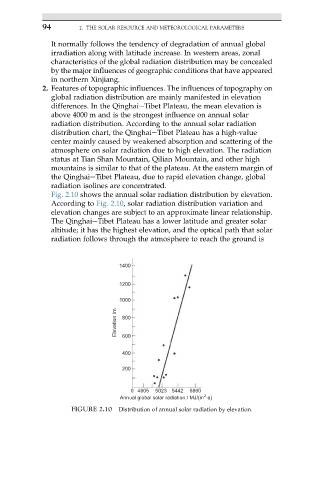
               Fig. 2.10 shows the annual solar radiation distribution by elevation.
               According to Fig. 2.10, solar radiation distribution variation and
               elevation changes are subject to an approximate linear relationship.
               The QinghaieTibet Plateau has a lower latitude and greater solar
               altitude; it has the highest elevation, and the optical path that solar
               radiation follows through the atmosphere to reach the ground is


                                 1400


                                 1200
                                 1000
                                Elevation /m  800


                                  600

                                  400

                                  200


                                    0 4605  5023 5442  5860
                                                        2
                                 Annual global solar radiation / MJ/(m ∙a)
                    FIGURE 2.10  Distribution of annual solar radiation by elevation.

