


Page 90 - Designing Autonomous Mobile Robots : Inside the Mindo f an Intellegent Machine
P. 90
Closed Loop Controls, Rabbits and Hounds

               closing error to be minimized, the gain is smoothly reduced back to its base setting. I
               have found this technique quite effective.

               Tuning controls

               The problem that now arises is one of tuning. There are many terms that all inter-
               play. The first thing that is needed is a good diagnostic display upon which we can
               view the rabbit, reading, power output, and various term contributions. The graphs
               shown in this chapter are from an actual temperature control system written in
               Visual Basic. Readings are stored into a large array, and then displayed on the graphs
               in the scale and format desired.
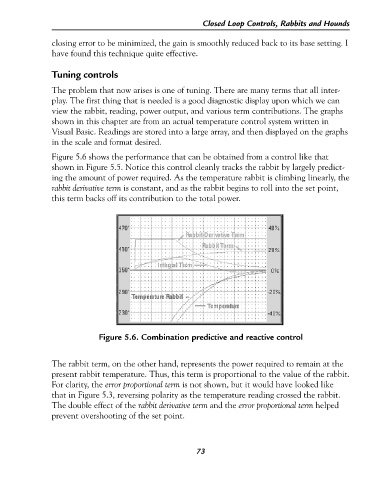
               Figure 5.6 shows the performance that can be obtained from a control like that
               shown in Figure 5.5. Notice this control cleanly tracks the rabbit by largely predict-
               ing the amount of power required. As the temperature rabbit is climbing linearly, the
               rabbit derivative term is constant, and as the rabbit begins to roll into the set point,
               this term backs off its contribution to the total power.


                            Figure 5.6. Combination predictive and reactive control


               The rabbit term, on the other hand, represents the power required to remain at the
               present rabbit temperature. Thus, this term is proportional to the value of the rabbit.
               For clarity, the error proportional term is not shown, but it would have looked like
               that in Figure 5.3, reversing polarity as the temperature reading crossed the rabbit.
               The double effect of the rabbit derivative term and the error proportional term helped
               prevent overshooting of the set point.


                                                        73

