


Page 315 - E-Bussiness and E-Commerce Management Strategy, Implementation, and Practice
P. 315
M05_CHAF9601_04_SE_C05.QXD:D01_CHAF7409_04_SE_C01.QXD  16/4/09  11:12  Page 282


                282  Part 2 Strategy and applications


                                                                     2
                                                              Strategic objectives

                                                     • Vision                   • Objectives
                                                    • Mission


                                                                                 Objectives
                                                    Vision
                                                                           • SMART objectives
                                           • Replace vs Complement         • Online revenue contribution
                                           • Extent of adaptability needed  • Customer value targets
                                                                           • Balanced scorecards


                                                          E-business specific techniques
                                                     • Vision about capability to change, to reinvent
                                                           • Online revenue contribution


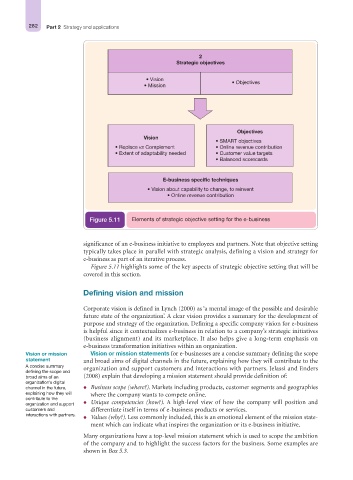
                                   Figure 5.11  Elements of strategic objective setting for the e-business


                                 significance of an e-business initiative to employees and partners. Note that objective setting
                                 typically takes place in parallel with strategic analysis, defining a vision and strategy for
                                 e-business as part of an iterative process.
                                   Figure 5.11 highlights some of the key aspects of strategic objective setting that will be
                                 covered in this section.


                                 Defining vision and mission

                                 Corporate vision is defined in Lynch (2000) as ‘a mental image of the possible and desirable

                                 future state of the organization’. A clear vision provides a summary for the development of
                                 purpose and strategy of the organization. Defining a specific company vision for e-business
                                 is helpful since it contextualizes e-business in relation to a company’s strategic initiatives
                                 (business alignment) and its marketplace. It also helps give a long-term emphasis on
                                 e-business transformation initiatives within an organization.
               Vision or mission   Vision or mission statements for e-businesses are a concise summary defining the scope
               statement         and broad aims of digital channels in the future, explaining how they will contribute to the
               A concise summary  organization and support customers and interactions with partners. Jelassi and Enders
               defining the scope and
               broad aims of an  (2008) explain that developing a mission statement should provide definition of:
               organization’s digital
               channel in the future,    Business scope (where?). Markets including products, customer segments and geographies
               explaining how they will  where the company wants to compete online.
               contribute to the
               organization and support    Unique competencies (how?). A high-level view of how the company will position and
               customers and       differentiate itself in terms of e-business products or services.
               interactions with partners.
                                   Values (why?). Less commonly included, this is an emotional element of the mission state-
                                   ment which can indicate what inspires the organization or its e-business initiative.
                                 Many organizations have a top-level mission statement which is used to scope the ambition
                                 of the company and to highlight the success factors for the business. Some examples are
                                 shown in Box 5.3.

