


Page 303 - Electronic Commerce
P. 303
Chapter 6


                                Convey Information  Receive Information  Facilitate and Monitor
                                  to Customers    from Customers   Communications Among Customers

                 Social networking  Purchase advertising,  Collect information from  Collect a body of shared knowledge
                 sites         post offers and  and summarize customer  from customer posts and use it to
                               promotions, post  posts for analysis  build customer loyalty
                               information about
                               products/services
                 Blogs         Publish updates on  Encourage customers  Monitor and summarize customer
                               forthcoming products,  to submit new ideas,  discussions about products/services
      278
                               provide service  purchase intentions, and  and the overall brand for analysis
                               information on existing  reservations about
                               products         existing products/services
                 Microblogs    Answer questions  Actively solicit customer  Monitor carefully customer messages
                               about products/services,  input on current products/  and summarize for analysis to identify
                               respond to customer  services and ideas for  new trends in their perceptions and
                               messages with specific  improvements and new  thinking
                               answers          products/services
                 Location-aware  Post information about  Encourage customers  Connect geographically disparate
                 mobile social  new retail locations,  to contribute tips and  customers to each other and collect
                 networks      specific promotions at  comments regarding  information about differences in
                               particular locations  specific locations  customer experiences and perceptions
                                                                  at different locations

                Adapted from Table 1 in Chua and Banerjee (2013, p. 240), “Customer Knowledge Management Via Social Media: The Case of
                Starbucks,” Journal of Knowledge Managment, 17(2), 237–249.
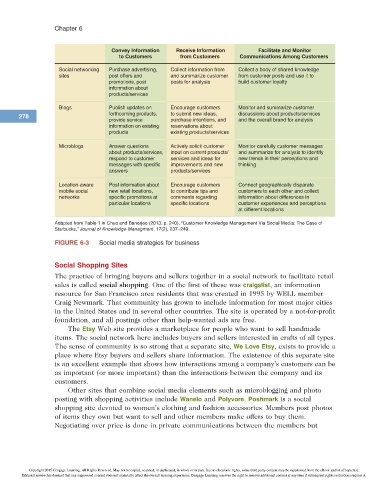
                FIGURE 6-3  Social media strategies for business


                Social Shopping Sites
                The practice of bringing buyers and sellers together in a social network to facilitate retail
                sales is called social shopping. One of the first of these was craigslist, an information
                resource for San Francisco area residents that was created in 1995 by WELL member
                Craig Newmark. That community has grown to include information for most major cities
                in the United States and in several other countries. The site is operated by a not-for-profit
                foundation, and all postings other than help-wanted ads are free.
                    The Etsy Web site provides a marketplace for people who want to sell handmade
                items. The social network here includes buyers and sellers interested in crafts of all types.
                The sense of community is so strong that a separate site, We Love Etsy, exists to provide a
                place where Etsy buyers and sellers share information. The existence of this separate site
                is an excellent example that shows how interactions among a company’s customers can be
                as important (or more important) than the interactions between the company and its
                customers.
                    Other sites that combine social media elements such as microblogging and photo
                posting with shopping activities include Wanelo and Polyvore. Poshmark is a social
                shopping site devoted to women’s clothing and fashion accessories. Members post photos
                of items they own but want to sell and other members make offers to buy them.
                Negotiating over price is done in private communications between the members but


         Copyright 2015 Cengage Learning. All Rights Reserved. May not be copied, scanned, or duplicated, in whole or in part. Due to electronic rights, some third party content may be suppressed from the eBook and/or eChapter(s).
       Editorial review has deemed that any suppressed content does not materially affect the overall learning experience. Cengage Learning reserves the right to remove additional content at any time if subsequent rights restrictions require it.

