


Page 329 - Facility Piping Systems Handbook for Industrial, Commercial, and Healthcare Facilities
P. 329
SITE UTILITY SYSTEMS

                                                SITE UTILITY SYSTEMS                 6.51


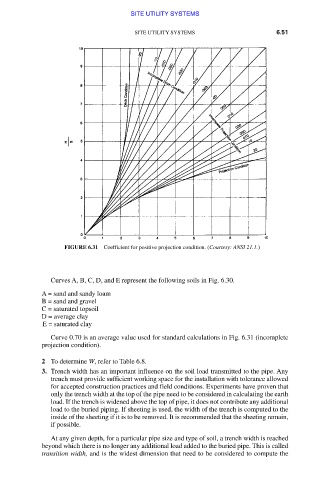
                              FIGURE 6.31  Coefficient for positive projection condition. (Courtesy: ANSI 21.1.)


                          Curves A, B, C, D, and E represent the following soils in Fig. 6.30.
                        A = sand and sandy loam
                        B = sand and gravel
                        C = saturated topsoil
                        D = average clay
                         E = saturated clay
                          Curve 0.70 is an average value used for standard calculations in Fig. 6.31 (incomplete
                        projection condition).

                        2  To determine W, refer to Table 6.8.
                        3.  Trench width has an important influence on the soil load transmitted to the pipe. Any
                          trench must provide sufficient working space for the installation with tolerance allowed
                          for accepted construction practices and field conditions. Experiments have proven that
                          only the trench width at the top of the pipe need to be considered in calculating the earth
                          load. If the trench is widened above the top of pipe, it does not contribute any additional
                          load to the buried piping. If sheeting is used, the width of the trench is computed to the
                          inside of the sheeting if it is to be removed. It is recommended that the sheeting remain,
                          if possible.

                          At any given depth, for a particular pipe size and type of soil, a trench width is reached
                        beyond which there is no longer any additional load added to the buried pipe. This is called
                        transition width, and is the widest dimension that need to be considered to compute the


                     Downloaded from Digital Engineering Library @ McGraw-Hill (www.accessengineeringlibrary.com)
                                Copyright © 2009 The McGraw-Hill Companies. All rights reserved.
                                  Any use is subject to the Terms of Use as given at the website.

