


Page 136 - Fluid Catalytic Cracking Handbook
P. 136
FCC Catalysts    111

      100

       90

       80


       70

       60

       50

       40
          0.0             0.5             1.0             1.5
                               CRC(wt%)
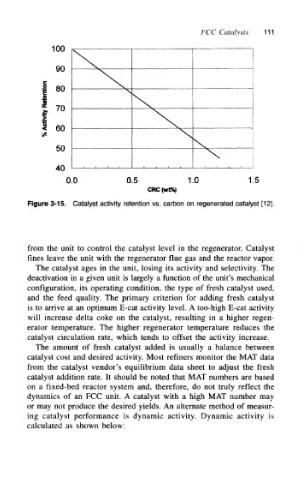
 Figure 3-15. Catalyst activity retention vs. carbon on regenerated catalyst [12].


 from the unit to control the catalyst level in the regenerator. Catalyst
 fines leave the unit with the regenerator flue gas and the reactor vapor.
  The catalyst ages in the unit, losing its activity and selectivity. The
 deactivation in a given unit is largely a function of the unit's mechanical
 configuration, its operating condition, the type of fresh catalyst used,
 and the feed quality. The primary criterion for adding fresh catalyst
 is to arrive at an optimum E-cat activity level. A too-high E-cat activity
 will increase delta coke on the catalyst, resulting in a higher regen-
 erator temperature. The higher regenerator temperature reduces the
 catalyst circulation rate, which tends to offset the activity increase.
  The amount of fresh catalyst added is usually a balance between
 catalyst cost and desired activity. Most refiners monitor the MAT data
 from the catalyst vendor's equilibrium data sheet to adjust the fresh
 catalyst addition rate. It should be noted that MAT numbers are based
 on a fixed-bed reactor system and, therefore, do not truly reflect the
 dynamics of an FCC unit. A catalyst with a high MAT number may
 or may not produce the desired yields. An alternate method of measur-
 ing catalyst performance is dynamic activity. Dynamic activity is
 calculated as shown below:

