


Page 525 - Forensic Structural Engineering Handbook
P. 525
TIMBER STRUCTURES                   14.15

                 2.0  Impact
               Ratio of working stress to allowable stress for normal loading duration  1.7  7 days
                 1.9
                 1.8

                 1.6
                 1.5
                 1.4
                 1.3
                 1.2
                 1.1
                 1.0
                 0.9                                           Normal  Permanent
                    1 sec.    1 min.   1 hour  1 day   1 month  1 year  10 years  50 years

                                    Duration of maximum load
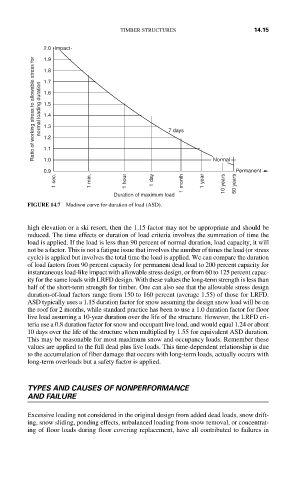
             FIGURE 14.7  Madison curve for duration of load (ASD).


             high elevation or a ski resort, then the 1.15 factor may not be appropriate and should be
             reduced. The time effects or duration of load criteria involves the summation of time the
             load is applied. If the load is less than 90 percent of normal duration, load capacity, it will
             not be a factor. This is not a fatigue issue that involves the number of times the load (or stress
             cycle) is applied but involves the total time the load is applied. We can compare the duration
             of load factors from 90 percent capacity for permanent dead load to 200 percent capacity for
             instantaneous load-like impact with allowable stress design, or from 60 to 125 percent capac-
             ity for the same loads with LRFD design. With these values the long-term strength is less than
             half of the short-term strength for timber. One can also see that the allowable stress design
             duration-of-load factors range from 150 to 160 percent (average 1.55) of those for LRFD.
             ASD typically uses a 1.15 duration factor for snow assuming the design snow load will be on
             the roof for 2 months, while standard practice has been to use a 1.0 duration factor for floor
             live load assuming a 10-year duration over the life of the structure. However, the LRFD cri-
             teria use a 0.8 duration factor for snow and occupant live load, and would equal 1.24 or about
             10 days over the life of the structure when multiplied by 1.55 for equivalent ASD duration.
             This may be reasonable for most maximum snow and occupancy loads. Remember these
             values are applied to the full dead plus live loads. This time-dependent relationship is due
             to the accumulation of fiber damage that occurs with long-term loads, actually occurs with
             long-term overloads but a safety factor is applied.


             TYPES AND CAUSES OF NONPERFORMANCE
             AND FAILURE

             Excessive loading not considered in the original design from added dead loads, snow drift-
             ing, snow sliding, ponding effects, unbalanced loading from snow removal, or concentrat-
             ing of floor loads during floor covering replacement, have all contributed to failures in

