


Page 329 - gas transport in porous media
P. 329
328
                                                    In Situ Flux Measurement
                                                 Sampling location "1"; 6 feet deep      Tartre
                                        30
                                                                              1400
                                         Concentrations
                                        25  [gas in %]                        1200
                                        20                                    1000
                                                                              800
                                        15                                         Concentrations [vapors in ppm]
                                                                              600
                                        10
                                                                              400
                                         5
                                                                              200
                                         0                                    0
                                           3       2       1       0       1
                                                        Time (in minutes)
                                                       Oxygen  Vapors
                                                   In Situ Flux Measurement
                                               Sampling location "13"; 6 feet deep
                                    25
                                                                                 1400
                                    20                                           1200
                                   Concentrations                                1000
                                    [gas in %]
                                     15
                                                                                 800 Concentrations [vapors in ppm]
                                    10                                           600
                                                                                 400
                                     5
                                                                                 200
                                     0                                           0
                                      5    4    3    2   1    0    1    2   3
                                                       Time (in minutes)
                                                       Oxygen  Vapors

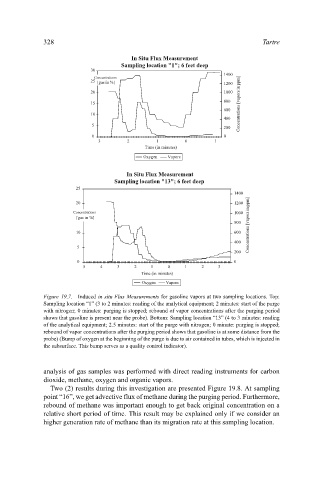
                           Figure 19.7.  Induced in situ Flux Measurements for gasoline vapors at two sampling locations. Top:
                           Sampling location “1” (3 to 2 minutes: reading of the analytical equipment; 2 minutes: start of the purge
                           with nitrogen; 0 minutes: purging is stopped; rebound of vapor concentrations after the purging period
                           shows that gasoline is present near the probe). Bottom: Sampling location “13” (4 to 3 minutes: reading
                           of the analytical equipment; 2.5 minutes: start of the purge with nitrogen; 0 minute: purging is stopped;
                           rebound of vapor concentrations after the purging period shows that gasoline is at some distance from the
                           probe) (Bump of oxygen at the beginning of the purge is due to air contained in tubes, which is injected in
                           the subsurface. This bump serves as a quality control indicator).


                           analysis of gas samples was performed with direct reading instruments for carbon
                           dioxide, methane, oxygen and organic vapors.
                             Two (2) results during this investigation are presented Figure 19.8. At sampling
                           point “16”, we get advective flux of methane during the purging period. Furthermore,
                           rebound of methane was important enough to get back original concentration on a
                           relative short period of time. This result may be explained only if we consider an
                           higher generation rate of methane than its migration rate at this sampling location.

