


Page 236 - Materials Chemistry, Second Edition
P. 236
ACCOUNTING FOR ECOSYSTEM GOODS AND SERVICES         223

                                MJ of non-renewable fossil fuel energy
                                required to make 1kg of 1,3-propanediol


                                                                               Fossil-based
                                                                              I Bio-based


                        Process LCA         EIO-LCA           Eco-LCA
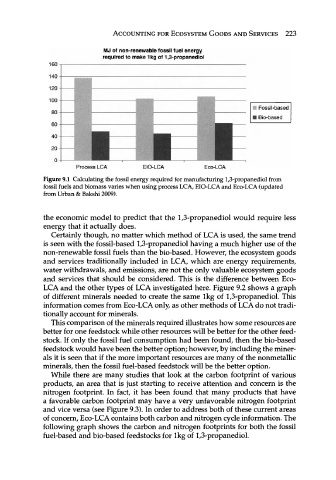
              Figure 9.1 Calculating the fossil energy required for manufacturing 1,3-propanediol from
              fossil fuels and biomass varies when using process LCA, EIO-LCA and Eco-LCA (updated
              from Urban & Bakshi 2009).


              the economic model to predict that the 1,3-propanediol would require less
              energy that it actually does.
                Certainly though, no matter which method of LCA is used, the same trend
              is seen with the fossil-based 1,3-propanediol having a much higher use of the
              non-renewable fossil fuels than the bio-based. However, the ecosystem goods
              and services traditionally included in LCA, which are energy requirements,
              water withdrawals, and emissions, are not the only valuable ecosystem goods
              and services that should be considered. This is the difference between Eco-
              LCA and the other types of LCA investigated here. Figure 9.2 shows a graph
              of different minerals needed to create the same 1kg of 1,3-propanediol. This
              information comes from Eco-LCA only, as other methods of LCA do not tradi-
              tionally account for minerals.
                This comparison of the minerals required illustrates how some resources are
              better for one feedstock while other resources will be better for the other feed-
              stock. If only the fossil fuel consumption had been found, then the bio-based
              feedstock would have been the better option; however, by including the miner-
              als it is seen that if the more important resources are many of the nonmetallic
              minerals, then the fossil fuel-based feedstock will be the better option.
                While there are many studies that look at the carbon footprint of various
              products, an area that is just starting to receive attention and concern is the
              nitrogen footprint. In fact, it has been found that many products that have
              a favorable carbon footprint may have a very unfavorable nitrogen footprint
              and vice versa (see Figure 9.3). In order to address both of these current areas
              of concern, Eco-LCA contains both carbon and nitrogen cycle information. The
              following graph shows the carbon and nitrogen footprints for both the fossil
              fuel-based and bio-based feedstocks for 1kg of 1,3-propanediol.

