


Page 499 -
P. 499
498 Part Three  Key System Applications for the Digital Age


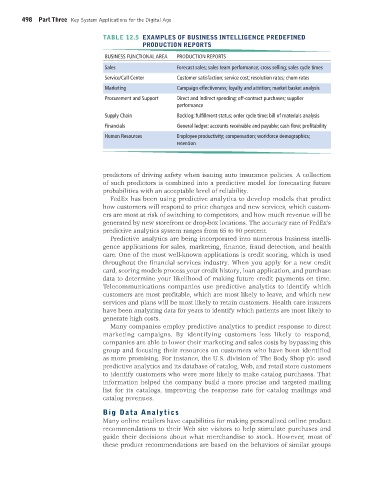
                                   TABLE 12.5   EXAMPLES OF BUSINESS INTELLIGENCE PREDEFINED
                                                PRODUCTION REPORTS

                                   BUSINESS FUNCTIONAL AREA  PRODUCTION REPORTS
                                   Sales                   Forecast sales; sales team performance; cross selling; sales cycle times
                                   Service/Call Center     Customer satisfaction; service cost; resolution rates; churn rates
                                   Marketing               Campaign effectiveness; loyalty and attrition; market basket analysis

                                   Procurement and Support  Direct and indirect spending; off-contract purchases; supplier
                                                           performance
                                   Supply Chain            Backlog; fulfillment status; order cycle time; bill of materials analysis
                                   Financials              General ledger; accounts receivable and payable; cash flow; profitability
                                   Human Resources         Employee productivity; compensation; workforce demographics;
                                                           retention


                                   predictors of driving safety when issuing auto insurance policies. A collection
                                   of such predictors is combined into a predictive model for forecasting future
                                   probabilities with an acceptable level of reliability.
                                     FedEx has been using predictive analytics to develop models that predict
                                   how customers will respond to price changes and new services, which custom-
                                   ers are most at risk of switching to competitors, and how much revenue will be
                                   generated by new storefront or drop-box locations. The accuracy rate of FedEx’s
                                   predictive analytics system ranges from 65 to 90 percent.
                                     Predictive analytics are being incorporated into numerous business intelli-
                                   gence applications for sales, marketing, finance, fraud detection, and health
                                   care. One of the most well-known applications is credit scoring, which is used
                                   throughout the financial services industry. When you apply for a new credit
                                   card, scoring models process your credit history, loan application, and  purchase
                                   data to determine your likelihood of making future credit payments on time.
                                   Telecommunications companies use predictive analytics to identify which
                                     customers are most profitable, which are most likely to leave, and which new
                                   services and plans will be most likely to retain customers. Health care insurers
                                   have been analyzing data for years to identify which patients are most likely to
                                   generate high costs.
                                     Many companies employ predictive analytics to predict response to direct
                                   marketing campaigns. By identifying customers less likely to respond,
                                     companies are able to lower their marketing and sales costs by bypassing this
                                   group and focusing their resources on customers who have been  identified
                                   as more promising. For instance, the U.S. division of The Body Shop plc used
                                     predictive analytics and its database of catalog, Web, and retail store  customers
                                   to identify customers who were more likely to make catalog purchases. That
                                   information helped the company build a more precise and targeted  mailing
                                   list for its catalogs, improving the response rate for catalog mailings and
                                     catalog revenues.
                                   Big Data Analytics
                                   Many online retailers have capabilities for making personalized online  product
                                   recommendations to their Web site visitors to help stimulate purchases and
                                   guide their decisions about what merchandise to stock. However, most of
                                   these product recommendations are based on the behaviors of similar groups


   MIS_13_Ch_12 global.indd   498                                                                             1/17/2013   2:30:32 PM

