


Page 332 -
P. 332
328                                                      M. Pesic et al.


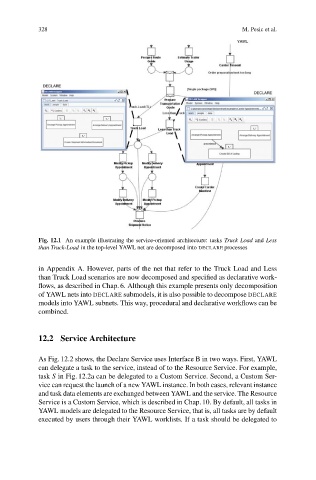
                           Fig. 12.1 An example illustrating the service-oriented architecture: tasks Truck Load and Less
                           than Truck-Load in the top-level YAWL net are decomposed into DECLARE processes

                           in Appendix A. However, parts of the net that refer to the Truck Load and Less
                           than Truck Load scenarios are now decomposed and specified as declarative work-
                           flows, as described in Chap. 6. Although this example presents only decomposition
                           of YAWL nets into DECLARE submodels, it is also possible to decompose DECLARE
                           models into YAWL subnets. This way, procedural and declarative workflows can be
                           combined.


                           12.2 Service Architecture


                           As Fig. 12.2 shows, the Declare Service uses Interface B in two ways. First, YAWL
                           can delegate a task to the service, instead of to the Resource Service. For example,
                           task S in Fig. 12.2a can be delegated to a Custom Service. Second, a Custom Ser-
                           vice can request the launch of a new YAWL instance. In both cases, relevant instance
                           and task data elements are exchanged between YAWL and the service. The Resource
                           Service is a Custom Service, which is described in Chap.10. By default, all tasks in
                           YAWL models are delegated to the Resource Service, that is, all tasks are by default
                           executed by users through their YAWL worklists. If a task should be delegated to

