


Page 52 - Robotics Designing the Mechanisms for Automated Machinery
P. 52
2.1 Processing Layout                         41


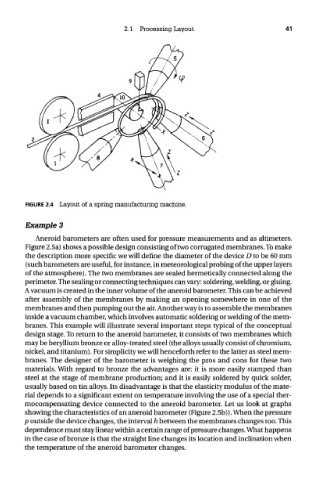
         FIGURE 2.4 Layout of a spring manufacturing machine.


        Example 3
           Aneroid barometers are often used for pressure measurements and as altimeters.
        Figure 2.5a) shows a possible design consisting of two corrugated membranes. To make
        the description more specific we will define the diameter of the device D to be 60 mm
         (such barometers are useful, for instance, in meteorological probing of the upper layers
         of the atmosphere). The two membranes are sealed hermetically connected along the
        perimeter. The sealing or connecting techniques can vary: soldering, welding, or gluing.
        A vacuum is created in the inner volume of the aneroid barometer. This can be achieved
         after assembly of the membranes by making an opening somewhere in one of the
        membranes and then pumping out the air. Another way is to assemble the membranes
        inside a vacuum chamber, which involves automatic soldering or welding of the mem-
        branes. This example will illustrate several important steps typical of the conceptual
        design stage. To return to the aneroid barometer, it consists of two membranes which
        may be beryllium bronze or alloy-treated steel (the alloys usually consist of chromium,
        nickel, and titanium). For simplicity we will henceforth refer to the latter as steel mem-
        branes. The designer of the barometer is weighing the pros and cons for these two
        materials. With regard to bronze the advantages are: it is more easily stamped than
        steel at the stage of membrane production; and it is easily soldered by quick solder,
        usually based on tin alloys. Its disadvantage is that the elasticity modulus of the mate-
        rial depends to a significant extent on temperature involving the use of a special ther-
        mocompensating device connected to the aneroid barometer. Let us look at graphs
        showing the characteristics of an aneroid barometer (Figure 2.5b)). When the pressure
        p outside the device changes, the interval h between the membranes changes too. This
        dependence must stay linear within a certain range of pressure changes. What happens
        in the case of bronze is that the straight line changes its location and inclination when
        the temperature of the aneroid barometer changes.

