


Page 319 - Structural Steel Designers Handbook AISC, AASHTO, AISI, ASTM, and ASCE-07 Design Standards
P. 319
Brockenbrough_Ch07.qxd  9/29/05  5:16 PM  Page 7.3


                                                     FLOOR AND ROOF SYSTEMS


                                                                                  FLOOR AND ROOF SYSTEMS  7.3


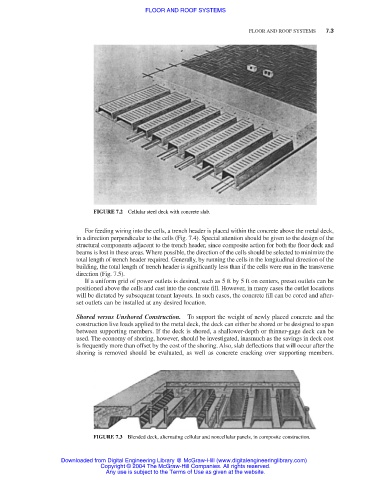
                                       FIGURE 7.2  Cellular steel deck with concrete slab.

                                    For feeding wiring into the cells, a trench header is placed within the concrete above the metal deck,
                                  in a direction perpendicular to the cells (Fig. 7.4). Special attention should be given to the design of the
                                  structural components adjacent to the trench header, since composite action for both the floor deck and
                                  beams is lost in these areas. Where possible, the direction of the cells should be selected to minimize the
                                  total length of trench header required. Generally, by running the cells in the longitudinal direction of the
                                  building, the total length of trench header is significantly less than if the cells were run in the transverse
                                  direction (Fig. 7.5).
                                    If a uniform grid of power outlets is desired, such as 5 ft by 5 ft on centers, preset outlets can be
                                  positioned above the cells and cast into the concrete fill. However, in many cases the outlet locations
                                  will be dictated by subsequent tenant layouts. In such cases, the concrete fill can be cored and after-
                                  set outlets can be installed at any desired location.
                                  Shored versus Unshored Construction.  To support the weight of newly placed concrete and the
                                  construction live loads applied to the metal deck, the deck can either be shored or be designed to span
                                  between supporting members. If the deck is shored, a shallower-depth or thinner-gage deck can be
                                  used. The economy of shoring, however, should be investigated, inasmuch as the savings in deck cost
                                  is frequently more than offset by the cost of the shoring. Also, slab deflections that will occur after the
                                  shoring is removed should be evaluated, as well as concrete cracking over supporting members.


                                       FIGURE 7.3  Blended deck, alternating cellular and noncellular panels, in composite construction.


                              Downloaded from Digital Engineering Library @ McGraw-Hill (www.digitalengineeringlibrary.com)
                                         Copyright © 2004 The McGraw-Hill Companies. All rights reserved.
                                          Any use is subject to the Terms of Use as given at the website.

