


Page 595 - Sustainable Cities and Communities Design Handbook
P. 595
562  Sustainable Cities and Communities Design Handbook


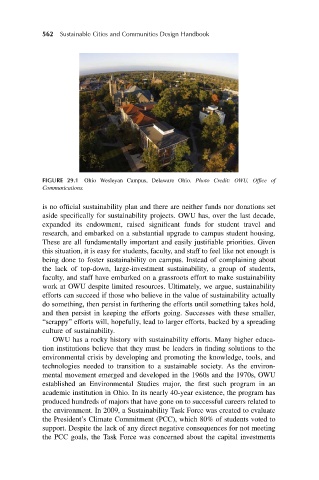
            FIGURE 29.1 Ohio Wesleyan Campus, Delaware Ohio. Photo Credit: OWU, Office of
            Communications.

            is no official sustainability plan and there are neither funds nor donations set
            aside specifically for sustainability projects. OWU has, over the last decade,
            expanded its endowment, raised significant funds for student travel and
            research, and embarked on a substantial upgrade to campus student housing.
            These are all fundamentally important and easily justifiable priorities. Given
            this situation, it is easy for students, faculty, and staff to feel like not enough is
            being done to foster sustainability on campus. Instead of complaining about
            the lack of top-down, large-investment sustainability, a group of students,
            faculty, and staff have embarked on a grassroots effort to make sustainability
            work at OWU despite limited resources. Ultimately, we argue, sustainability
            efforts can succeed if those who believe in the value of sustainability actually
            do something, then persist in furthering the efforts until something takes hold,
            and then persist in keeping the efforts going. Successes with these smaller,
            “scrappy” efforts will, hopefully, lead to larger efforts, backed by a spreading
            culture of sustainability.
               OWU has a rocky history with sustainability efforts. Many higher educa-
            tion institutions believe that they must be leaders in finding solutions to the
            environmental crisis by developing and promoting the knowledge, tools, and
            technologies needed to transition to a sustainable society. As the environ-
            mental movement emerged and developed in the 1960s and the 1970s, OWU
            established an Environmental Studies major, the first such program in an
            academic institution in Ohio. In its nearly 40-year existence, the program has
            produced hundreds of majors that have gone on to successful careers related to
            the environment. In 2009, a Sustainability Task Force was created to evaluate
            the President’s Climate Commitment (PCC), which 80% of students voted to
            support. Despite the lack of any direct negative consequences for not meeting
            the PCC goals, the Task Force was concerned about the capital investments

